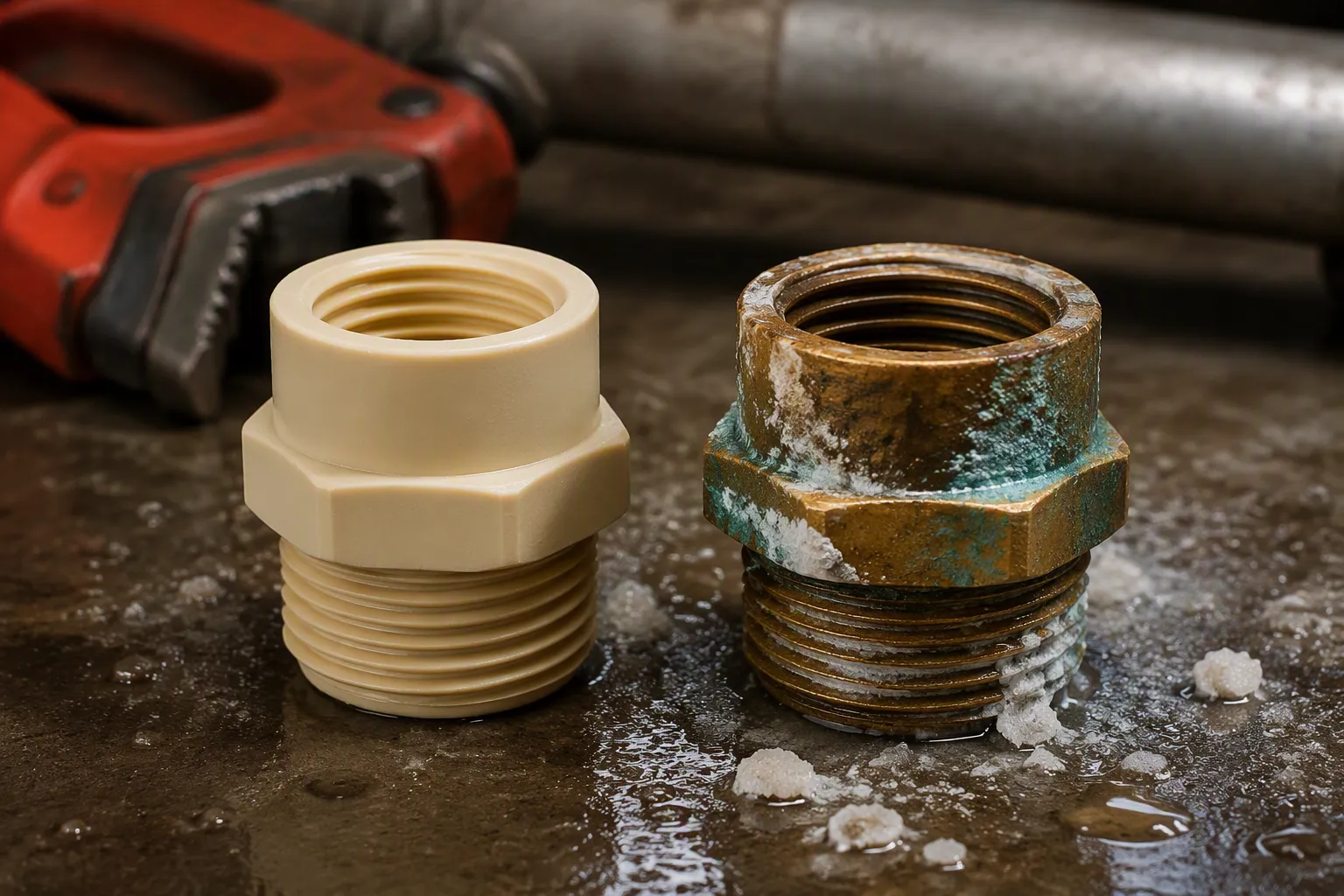
PPSU press fittings represent a high-performance thermoplastic piping system. You choose them for three decisive reasons: drastically reduced installation time, elimination of open flames and toxic chemicals, and exceptional durability against corrosion and scaling. These advantages make them the professional standard. Complete systems from leaders like TOP AQUA now dominate demanding plumbing projects worldwide.
Key Takeaways
-
PPSU press fittings install quickly and safely without flames or toxic chemicals.
-
Their corrosion resistance ensures a long lifespan, even in harsh water conditions.
-
These fittings work with various pipe types, offering flexibility for many plumbing projects.
Defining PPSU Press Fittings
The PPSU Polymer Advantage
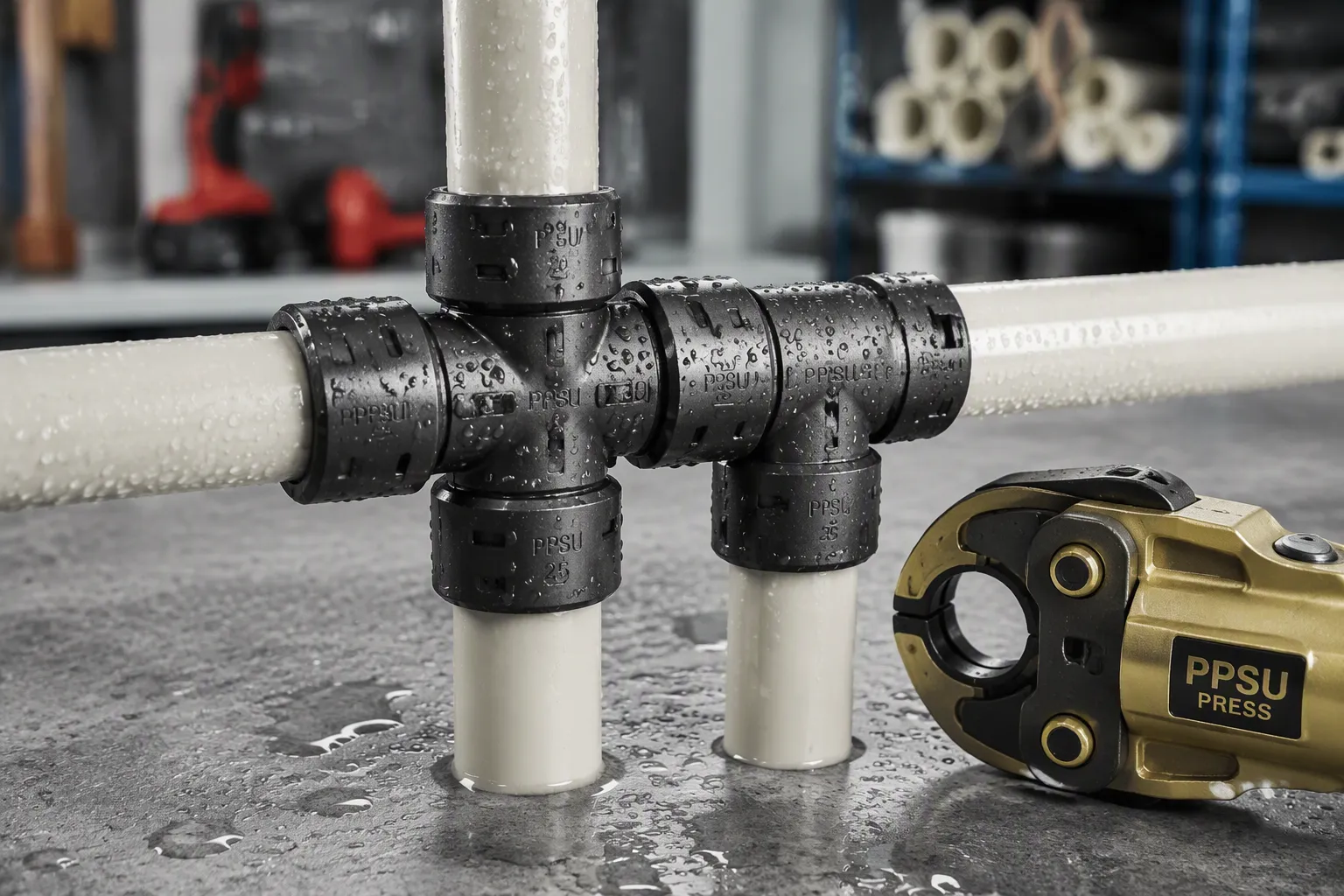
PPSU, or polyphenylsulfone, belongs to a family of high-performance thermoplastics engineered for demanding environments. You encounter this material in aerospace, medical sterilization, and now increasingly in plumbing. Its molecular structure includes biphenylene units that deliver exceptional toughness. The polymer resists impact, physical shocks, and installation stresses that would crack lesser plastics.
The chemical resistance profile makes PPSU particularly suited for potable water systems. The table below summarizes the key properties that drive this performance:
|
Property Category |
Specific Property |
Value / Range |
Relevance to Plumbing |
|---|---|---|---|
|
Chemical |
pH resistance |
1–13 |
Withstands acidic and alkaline water conditions |
|
Chemical |
Chlorine tolerance |
High |
Resists disinfectants in municipal water |
|
Chemical |
Hydrolytic stability |
Excellent |
Prevents breakdown from prolonged water exposure |
|
Mechanical |
Tensile strength (at break) |
>75 MPa |
Maintains integrity under water pressure |
|
Mechanical |
Glass transition temperature |
288 °C |
Ensures dimensional stability in hot water |
|
Mechanical |
Heat deflection temperature |
274 °C |
Prevents warping under thermal load |
These figures translate directly into real-world reliability. A PPSU fitting maintains its shape and seal integrity even during sanitation cycles up to 95°C and 10 bar operating pressure. Manufacturers project a service life exceeding 50 years under these conditions. Compare that to PVC, which retains only 30–40% of its tensile strength after one year of outdoor UV exposure. PPSU retains over 90% after 1,000 hours of xenon arc testing. Metal fittings corrode over time; PPSU does not.
The environmental story strengthens the case. Producing PPSU press fittings consumes 30% less energy than manufacturing brass fittings. When manufacturers use recycled PPSU, the carbon footprint drops by an additional 35% while retaining 90% of the original material properties. The lightweight nature of the polymer also reduces transportation emissions compared to heavier metal alternatives.
How the Pressing Mechanism Creates a Seal
The pressing mechanism transforms the raw material advantage into a permanent, leak-proof connection. You do not need solder, flux, or an open flame. Instead, a calibrated electromechanical press tool deforms the fitting onto the pipe. Two EPDM O-rings inside the fitting create the watertight barrier.
Follow this sequence for a successful joint:
-
Prepare the pipe – Cut squarely with a quality pipe cutter. Debur both inside and outside surfaces to protect the O-rings. Mark the insertion depth.
-
Inspect the O-ring – Check for cracks, debris, or aging. Replace the fitting if the O-ring appears brittle.
-
Assemble the fitting – Slide it onto the pipe until the depth mark disappears. Hold the fitting perpendicular to the pipe.
-
Press the joint – Select the correct jaw set. Position the jaw fully on the press profile. Initiate a single full cycle.
-
Verify the press – Use a Go/No-Go gauge. It should contact the fitting body without sliding over.
-
Never press under pressure – Drain lines and open vents before starting.
The O-ring compresses radially when the press tool deforms the fitting onto the pipe. This compression creates a mechanical interlock and presses the EPDM O-ring against the pipe surface, forming a durable seal.
Laboratory batch validation includes burst pressure tests, thermal cycling, and hydrostatic strength checks matching DIN 16892/16893 requirements. These tests confirm what the material properties promise: a connection that outlasts the building around it.
Why Use PPSU Press Fittings in Modern Plumbing
Installation Speed and Safety
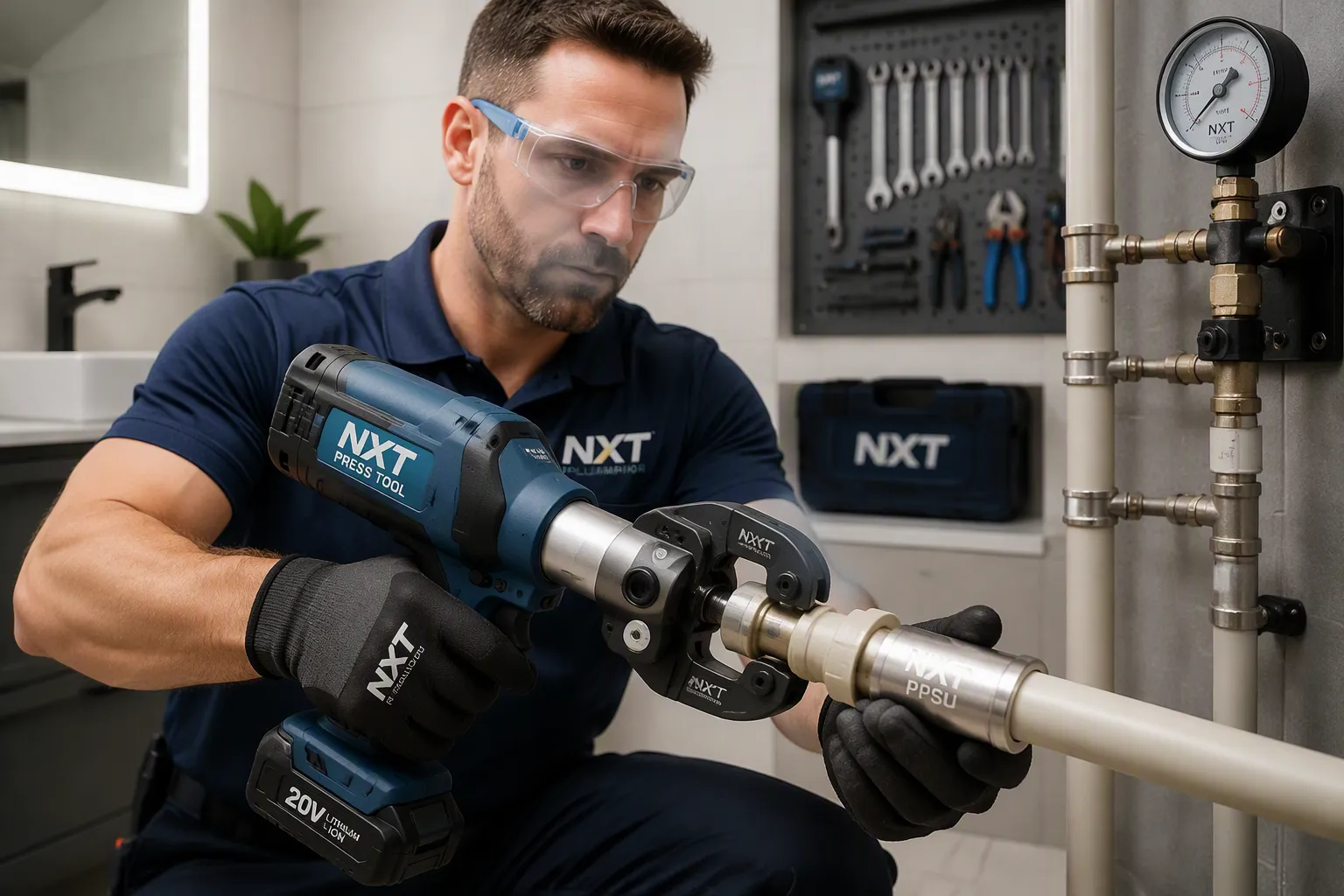
You eliminate the most dangerous and time-consuming steps of traditional plumbing when you adopt these fittings. No soldering torches, no open flames, and no toxic chemical primers or fluxes enter the job site. This change removes a major fire hazard from residential and commercial projects. A single press cycle takes seconds, not minutes. You complete a connection in the time it takes to heat a solder joint or thread a pipe. The labor savings compound quickly across a large project, reducing overall project timelines.
The speed advantage does not compromise quality. Every joint follows a repeatable process that removes human error. You cut the pipe square, deburr the edges, mark the insertion depth, and press. The tool applies a calibrated force every time. You then verify the joint with a Go/No-Go gauge. This consistency produces a leak-proof system that passes hydrostatic pressure tests reliably. The industry standard test requires you to pressurize the system to 1.5 times the maximum operating pressure for at least 24 hours. The pressure gauge holds steady, with only minor initial drops caused by PEX expansion in the connected lines. You inspect each fitting to confirm the press jaw imprint sits centered on the stainless steel sleeve and the pipe appears in the inspection windows. Common mistakes like failing to ream and calibrate pipes or using the wrong press jaw profile become avoidable with proper training. The safety benefits extend beyond fire prevention. You eliminate worker exposure to lead-based solder and chemical primers.
Long-Term Reliability and Versatility
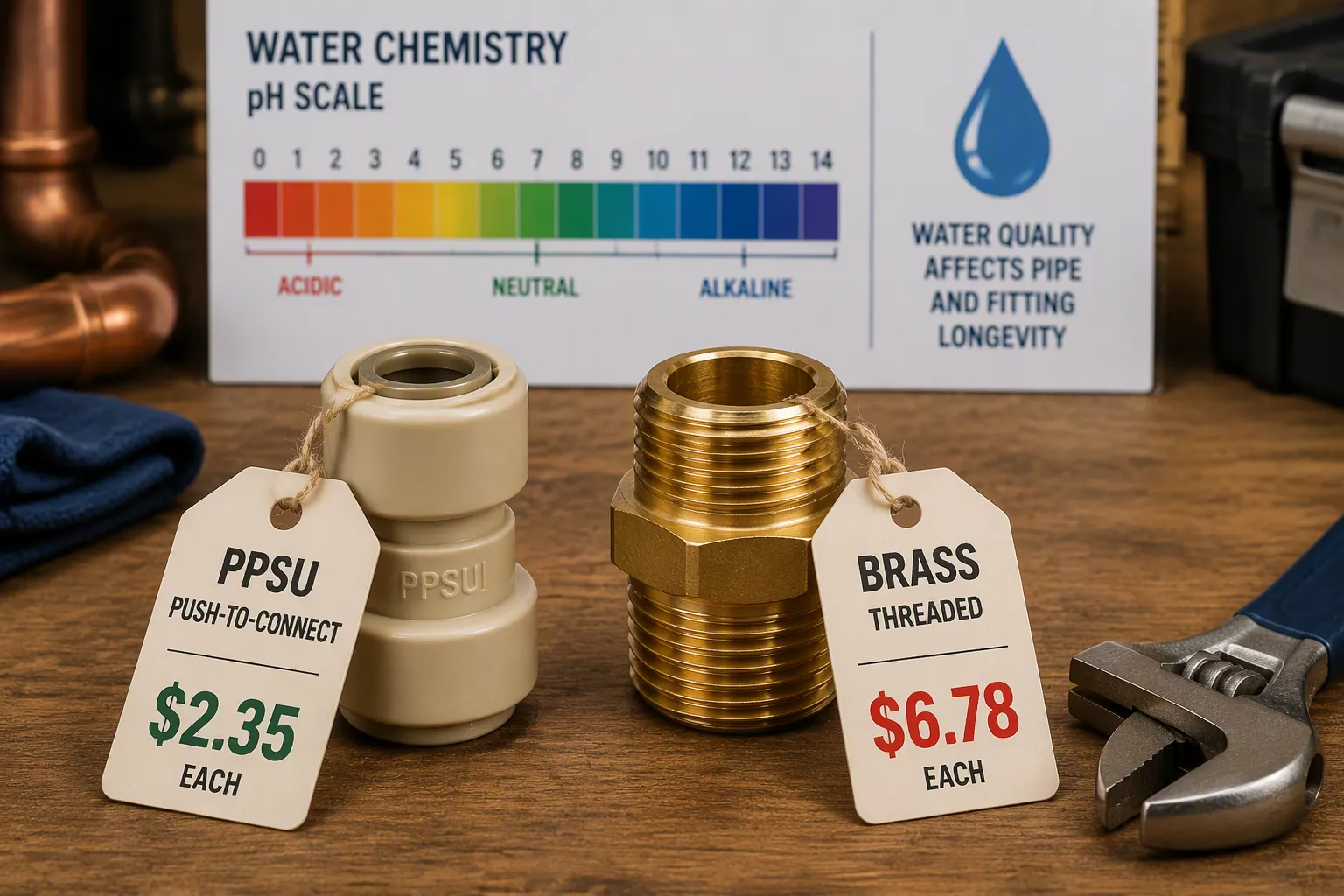
PPSU delivers a material advantage that brass cannot match. The polymer is inherently corrosion-proof, even surpassing metal alloys. PPSU press fittings are also less prone to scaling compared to brass alternatives. You can use the material safely in plumbing systems regardless of water hardness. As stated by Pipelife's Business Development Manager Stephan Müller, "PPSU fittings can be used with a broader range of drinking waters regardless of their corrosivity." This corrosion resistance eliminates the risk of dezincification that plagues brass fittings in aggressive water conditions.
The long-term reliability extends to the system's cost profile. Consider the comparison between a standard polymer system and a PEX-AL-PEX system, which mirrors the performance of PPSU-based systems:
|
Cost/Risk Variable |
Standard Polymer System |
PEX-AL-PEX System |
|---|---|---|
|
Initial Material Cost |
Baseline (1.0x) |
Premium (1.2x – 1.3x) |
|
Chemical Inhibitor Needs |
High (annual dosing) |
Low (initial fill only) |
|
Boiler Corrosion Risk |
High (10-15 years) |
Negligible (>30 years) |
|
20-Year Lifecycle Cost |
1.8x – 2.5x |
1.3x – 1.4x |
The premium initial investment pays back through lower maintenance and longer equipment life. You spend less on chemical inhibitors and face negligible boiler corrosion risk over three decades.
The versatility of the system matches its reliability. You specify PPSU press fittings for potable water systems in both residential and commercial buildings. They handle hot water supply lines and underfloor heating systems with equal performance. Radiant heating applications benefit from the material's resistance to thermal cycling. The same fittings serve cooling systems without modification. This single-system approach simplifies inventory management and reduces the chance of installing the wrong component. The fittings work with multiple pipe types, giving you design flexibility across different project requirements.
PPSU press fittings solve plumbing's three biggest challenges: time, safety, and long-term reliability. You gain faster installation without fire risk or toxic chemicals. The material's corrosion resistance ensures decades of dependable service. This combination makes them ideal for potable water and hydronic heating systems.
Consider these fittings for your next project. Complete systems from TOP AQUA deliver the performance and reliability you need.
FAQ
Can PPSU press fittings connect to existing metal or PEX pipes?
Yes. These fittings work with multiple pipe types, including PEX and multilayer composite pipes. You maintain design flexibility when retrofitting older systems or building new installations.
What pressure and temperature ratings should you expect?
PPSU press fittings maintain seal integrity during sanitation cycles up to 95°C at 10 bar operating pressure. Manufacturers project service life exceeding 50 years under these demanding conditions.
Do you need special training to install these fittings?
You need basic instruction on the five-step process: cut, deburr, mark, assemble, and press. The Go/No-Go gauge verifies each joint, eliminating guesswork and ensuring consistent quality.