How Top Aqua System Supports Global OEM Plumbing Projects

Global OEM projects demand reliability. Top Aqua System supports with professional plumbing manufacturer supplier producing certified PPSU press fittings. As PPSU fittings manufacturer, they offer high-performance products. Quality, durability, performance undergo rigorous testing. Patented leak-before technology ensures reliable connections. AENOR approval, European compliance validate components. Solutions for global plumbing projects. Pre-validated components de-risk expand.


Key Takeaways

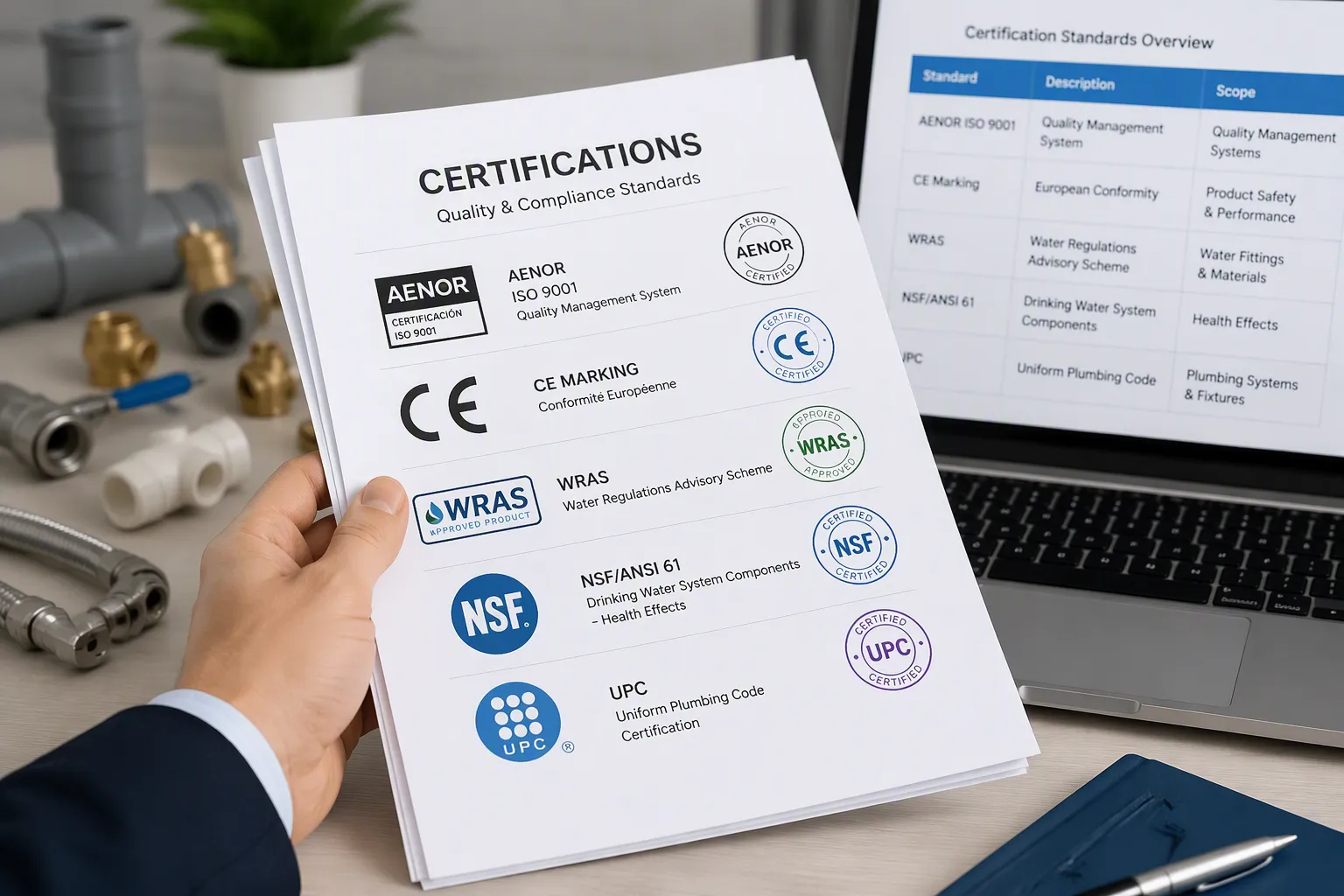
  • Top Aqua System holds global certifications like AENOR, CE, WRAS, and NSF, ensuring compliance across continents.

  • Patented leak-before technology detects unpressed fittings during testing, preventing failures and reducing rework.

  • Factory-direct OEM supply cuts costs by 20% and allows customization for regional standards.


Top Aqua System Certifications for Global Plumbing Projects
 

Top Aqua System Certifications for Global Plumbing Projects

When you manage large-scale plumbing installations across borders, certification documents become your first line of defense. Top Aqua System holds credentials that satisfy regulators, inspectors, and project owners worldwide. These certified products eliminate the guesswork from compliance, letting you focus on execution rather than paperwork.


AENOR and CE Compliance

AENOR approval carries significant weight in Spain and across broader European markets. This certification confirms that Top Aqua System's PPSU press fittings meet stringent requirements for safety and reliability. CE marking further opens doors to European market access, signaling full alignment with applicable directives. Beyond these regional marks, the company operates under an ISO 9001:2022 certified quality management system, which governs every stage from raw material intake to final inspection.

The certification portfolio extends considerably further. WRAS approval addresses UK drinking water safety, while NSF certification covers public health standards in the United States. UPC compliance satisfies American plumbing code requirements, and WATERMARK acceptance facilitates Australian projects. ACS certification handles French applications, and the product line meets EN-ISO 21003, EN-ISO 22391, and EN-ISO 15875 manufacturing standards. Additional compliance with EN 12828 and EN 10025 rounds out the picture. For you, this breadth means one supplier can serve projects across multiple continents without requalification delays. The table below summarizes these credentials:


Certification / Standard

Region / Purpose

AENOR

Spain & broader European compliance

CE marking

European market access

ISO 9001:2022

International quality management

WRAS

UK drinking water safety

NSF

Public health safety (US)

UPC

United States plumbing code

WATERMARK

Australian acceptance

ACS

French applications

EN-ISO 21003, EN-ISO 22391, EN-ISO 15875

European product manufacturing standards

EN 12828, EN 10025

Additional European standards compliance


Every fitting you specify arrives engineered for European standards and validated for global deployment. This certification depth transforms Top Aqua System from a mere supplier into a compliance partner who de-risks your international pipeline.


Patented Leak-Before Technology

Certifications establish trust on paper, but field performance determines project success. Top Aqua System's patented leak-before technology addresses the most common failure point in press fitting installations: improper connection. This innovation ensures that an unpressed fitting reveals itself immediately during pressure testing, before walls close or systems activate. Water escapes visibly at the joint, alerting installers to correct the connection on the spot.


This technology delivers measurable advantages for global plumbing projects. Large-scale installations involve hundreds or thousands of connections, each presenting an opportunity for human error. Traditional systems may hide defective joints until catastrophic failure occurs months later. Leak-before technology eliminates that risk entirely. Your installation crews receive immediate feedback, reducing rework substantially and keeping schedules intact. The rigorous testing behind this system validates performance under demanding conditions, confirming durability across temperature fluctuations and pressure variations common in commercial applications.


For OEM plumbing supplier relationships, this reliability translates directly into cost predictability. Fewer callbacks mean lower warranty exposure and stronger client relationships. When you evaluate custom plumbing fittings manufacturer options, prioritize this safety feature. The technology also supports private label plumbing components programs, where consistent quality protects your brand reputation across every market you serve. Top Aqua System's commitment to rigorous testing and performance verification ensures each batch meets the same exacting standards, regardless of destination country.


OEM/ODM Plumbing Solutions for Global Projects
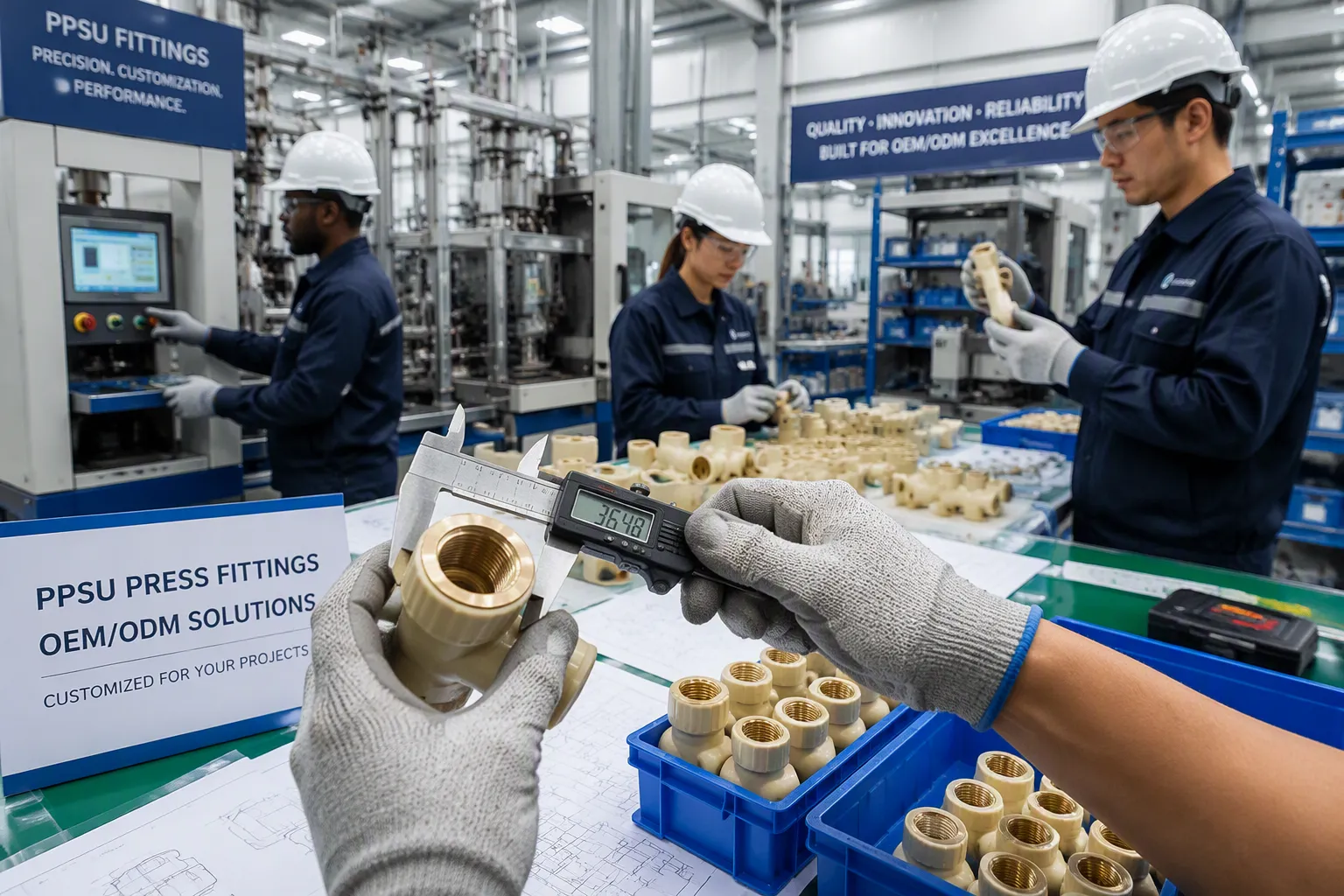
 

OEM/ODM Plumbing Solutions for Global Projects


Factory-Direct Supply and Customization

When you manage global plumbing projects, your supply chain structure directly affects project profitability. The company operates a factory-direct model that eliminates intermediaries found in traditional distribution. This approach delivers measurable cost advantages for your procurement strategy.

The financial impact becomes evident when you compare cost structures. Traditional distribution channels accumulate multiple markups. The factory production cost of $10.00 attracts a trading company markup of 25 percent, adding $2.50. An agent commission of 10 percent adds $1.00. Exporter fees of 15 percent add $1.50. These layers push the price before shipping to $15.00. The factory-direct supply adds only the factory profit of $2.00, bringing the pre-shipping cost to $12.00. With identical shipping costs of $3.00, the total landed cost becomes $15.00 versus $18.00. This represents a 20 percent cost reduction per unit. For large-scale projects, these savings compound into significant budget relief.

The direct relationship also enables extensive customization. You can specify material grades, dimensional tolerances, color coding, and packaging formats according to your needs. As an OEM plumbing supplier, the company collaborates with your engineering team to develop components that meet your exact specifications. The capabilities as a custom plumbing fittings manufacturer allow you to request unique configurations for your requirements. For organizations seeking brand ownership, private label plumbing components programs let you market these certified components under your own brand name. This flexibility ensures your products satisfy local market quality expectations while maintaining the high performance standards of PPSU press fittings.


Adapting to Global Plumbing Standards

Global projects rarely conform to a single code framework. Each region enforces distinct requirements for pressure ratings, temperature tolerances, and material safety. Top Aqua System's OEM services address this complexity through product adaptation. The engineering team reviews your target market's regulations and modifies component designs accordingly. Whether you need WRAS compliance for the United Kingdom or NSF certification for the United States, the manufacturing process incorporates these parameters from the start.

The factory-direct system supports rapid prototyping and thorough testing. You receive samples that match your specific standards before full production begins. This iterative process eliminates surprises during installation and confirms that every component performs as expected. The rigorous testing protocols that validate standard global product lines extend to customized PPSU press fittings variants as well. You benefit from the same quality assurance regardless of how specialized your requirements become.

For project managers seeking reliable manufacturing partners, this adaptability reduces risk across multiple fronts. You avoid delays associated with requalifying new vendors for each market. You maintain consistent quality across all project locations. You gain a partner who understands that large-scale work demands both technical excellence and logistical precision. Top Aqua System delivers on both requirements through its OEM/ODM capabilities. The proven technology, performance, and durability provide the foundation your work requires.


Top Aqua System delivers the certified quality and durability your global plumbing projects require. As a ppsu fittings manufacturer and ppsu press fittings supplier, they combine proven technology with rigorous testing. Their OEM solutions provide performance and cost savings. You secure a strategic partnership for safe, reliable systems. Contact us to discuss your project needs.


FAQ

What certifications does Top Aqua System hold for global projects?

Top Aqua System holds AENOR, CE, WRAS, NSF, and UPC approvals. These certified products satisfy regulators across Europe, the UK, and North America. You avoid requalification delays for global projects.

How does the factory-direct OEM model reduce project costs?

The factory-direct OEM model eliminates trading company markups and agent commissions. You save approximately 20 percent on landed costs. This technology-driven approach delivers cost-effective solutions for large-scale plumbing projects.

Can you customize ppsu press fittings for regional standards?

Absolutely. We are a ppsu fittings manufacturer. We adapt ppsu press fittings designs to meet local regulations. You receive samples for testing before production. This ensures performance and quality.
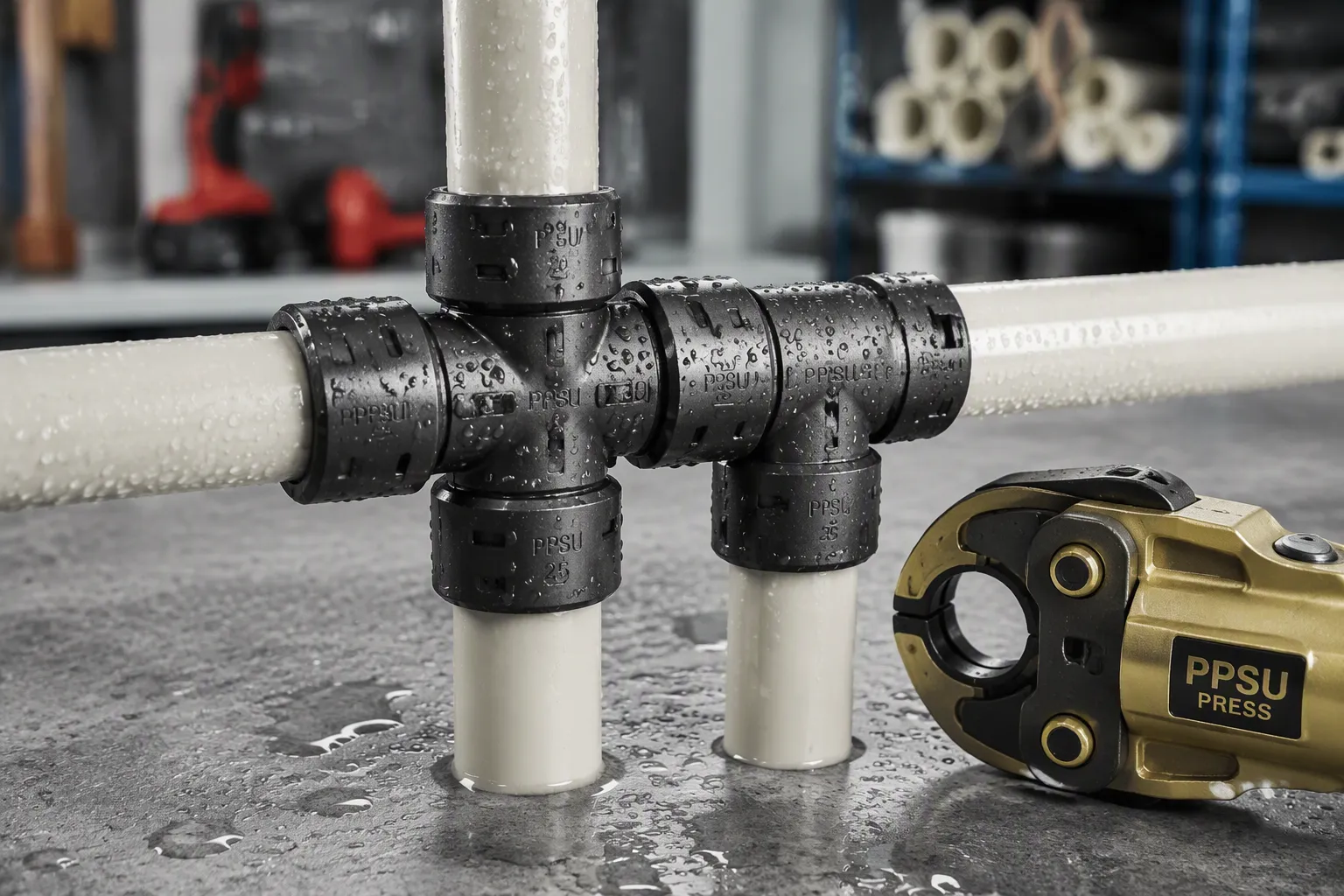
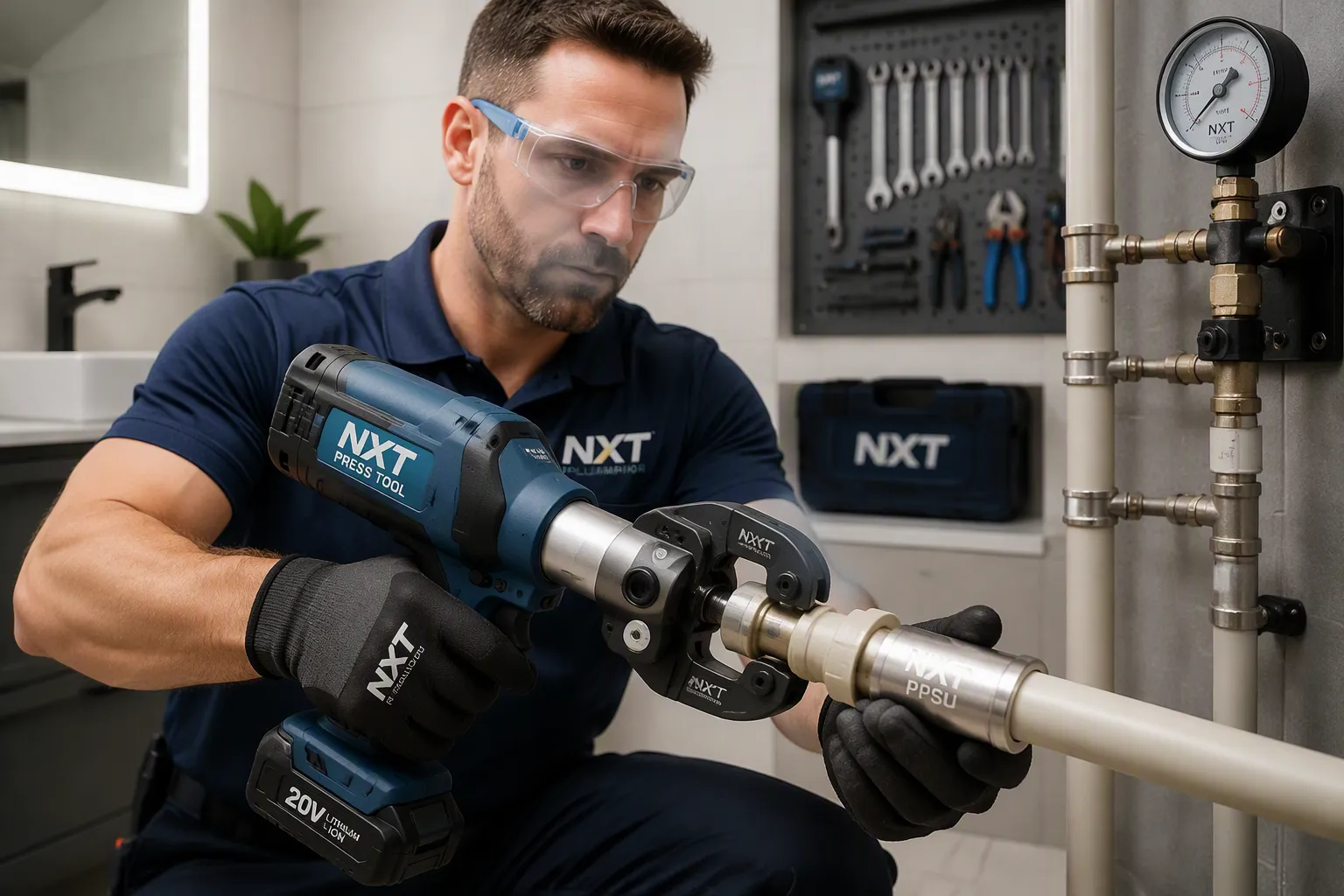
What Are PPSU Press Fittings and Why Are They Used in Modern Plumbing Systems?

PPSU press fittings represent a high-performance thermoplastic piping system. You choose them for three decisive reasons: drastically reduced installation time, elimination of open flames and toxic chemicals, and exceptional durability against corrosion and scaling. These advantages make them the professional standard. Complete systems from leaders like TOP AQUA now dominate demanding plumbing projects worldwide.


Key Takeaways

  • PPSU press fittings install quickly and safely without flames or toxic chemicals.

  • Their corrosion resistance ensures a long lifespan, even in harsh water conditions.

  • These fittings work with various pipe types, offering flexibility for many plumbing projects.


Defining PPSU Press Fittings

Defining PPSU Press Fittings


The PPSU Polymer Advantage

PPSU, or polyphenylsulfone, belongs to a family of high-performance thermoplastics engineered for demanding environments. You encounter this material in aerospace, medical sterilization, and now increasingly in plumbing. Its molecular structure includes biphenylene units that deliver exceptional toughness. The polymer resists impact, physical shocks, and installation stresses that would crack lesser plastics.

The chemical resistance profile makes PPSU particularly suited for potable water systems. The table below summarizes the key properties that drive this performance:


Property Category

Specific Property

Value / Range

Relevance to Plumbing

Chemical

pH resistance

1–13

Withstands acidic and alkaline water conditions

Chemical

Chlorine tolerance

High

Resists disinfectants in municipal water

Chemical

Hydrolytic stability

Excellent

Prevents breakdown from prolonged water exposure

Mechanical

Tensile strength (at break)

>75 MPa

Maintains integrity under water pressure

Mechanical

Glass transition temperature

288 °C

Ensures dimensional stability in hot water

Mechanical

Heat deflection temperature

274 °C

Prevents warping under thermal load


These figures translate directly into real-world reliability. A PPSU fitting maintains its shape and seal integrity even during sanitation cycles up to 95°C and 10 bar operating pressure. Manufacturers project a service life exceeding 50 years under these conditions. Compare that to PVC, which retains only 30–40% of its tensile strength after one year of outdoor UV exposure. PPSU retains over 90% after 1,000 hours of xenon arc testing. Metal fittings corrode over time; PPSU does not.

The environmental story strengthens the case. Producing PPSU press fittings consumes 30% less energy than manufacturing brass fittings. When manufacturers use recycled PPSU, the carbon footprint drops by an additional 35% while retaining 90% of the original material properties. The lightweight nature of the polymer also reduces transportation emissions compared to heavier metal alternatives.


How the Pressing Mechanism Creates a Seal

The pressing mechanism transforms the raw material advantage into a permanent, leak-proof connection. You do not need solder, flux, or an open flame. Instead, a calibrated electromechanical press tool deforms the fitting onto the pipe. Two EPDM O-rings inside the fitting create the watertight barrier.

Follow this sequence for a successful joint:

  1. Prepare the pipe – Cut squarely with a quality pipe cutter. Debur both inside and outside surfaces to protect the O-rings. Mark the insertion depth.

  2. Inspect the O-ring – Check for cracks, debris, or aging. Replace the fitting if the O-ring appears brittle.

  3. Assemble the fitting – Slide it onto the pipe until the depth mark disappears. Hold the fitting perpendicular to the pipe.

  4. Press the joint – Select the correct jaw set. Position the jaw fully on the press profile. Initiate a single full cycle.

  5. Verify the press – Use a Go/No-Go gauge. It should contact the fitting body without sliding over.

  6. Never press under pressure – Drain lines and open vents before starting.

The O-ring compresses radially when the press tool deforms the fitting onto the pipe. This compression creates a mechanical interlock and presses the EPDM O-ring against the pipe surface, forming a durable seal.

Laboratory batch validation includes burst pressure tests, thermal cycling, and hydrostatic strength checks matching DIN 16892/16893 requirements. These tests confirm what the material properties promise: a connection that outlasts the building around it.


Why Use PPSU Press Fittings in Modern Plumbing

Why Use PPSU Press Fittings in Modern Plumbing


Installation Speed and Safety

You eliminate the most dangerous and time-consuming steps of traditional plumbing when you adopt these fittings. No soldering torches, no open flames, and no toxic chemical primers or fluxes enter the job site. This change removes a major fire hazard from residential and commercial projects. A single press cycle takes seconds, not minutes. You complete a connection in the time it takes to heat a solder joint or thread a pipe. The labor savings compound quickly across a large project, reducing overall project timelines.

The speed advantage does not compromise quality. Every joint follows a repeatable process that removes human error. You cut the pipe square, deburr the edges, mark the insertion depth, and press. The tool applies a calibrated force every time. You then verify the joint with a Go/No-Go gauge. This consistency produces a leak-proof system that passes hydrostatic pressure tests reliably. The industry standard test requires you to pressurize the system to 1.5 times the maximum operating pressure for at least 24 hours. The pressure gauge holds steady, with only minor initial drops caused by PEX expansion in the connected lines. You inspect each fitting to confirm the press jaw imprint sits centered on the stainless steel sleeve and the pipe appears in the inspection windows. Common mistakes like failing to ream and calibrate pipes or using the wrong press jaw profile become avoidable with proper training. The safety benefits extend beyond fire prevention. You eliminate worker exposure to lead-based solder and chemical primers.


Long-Term Reliability and Versatility

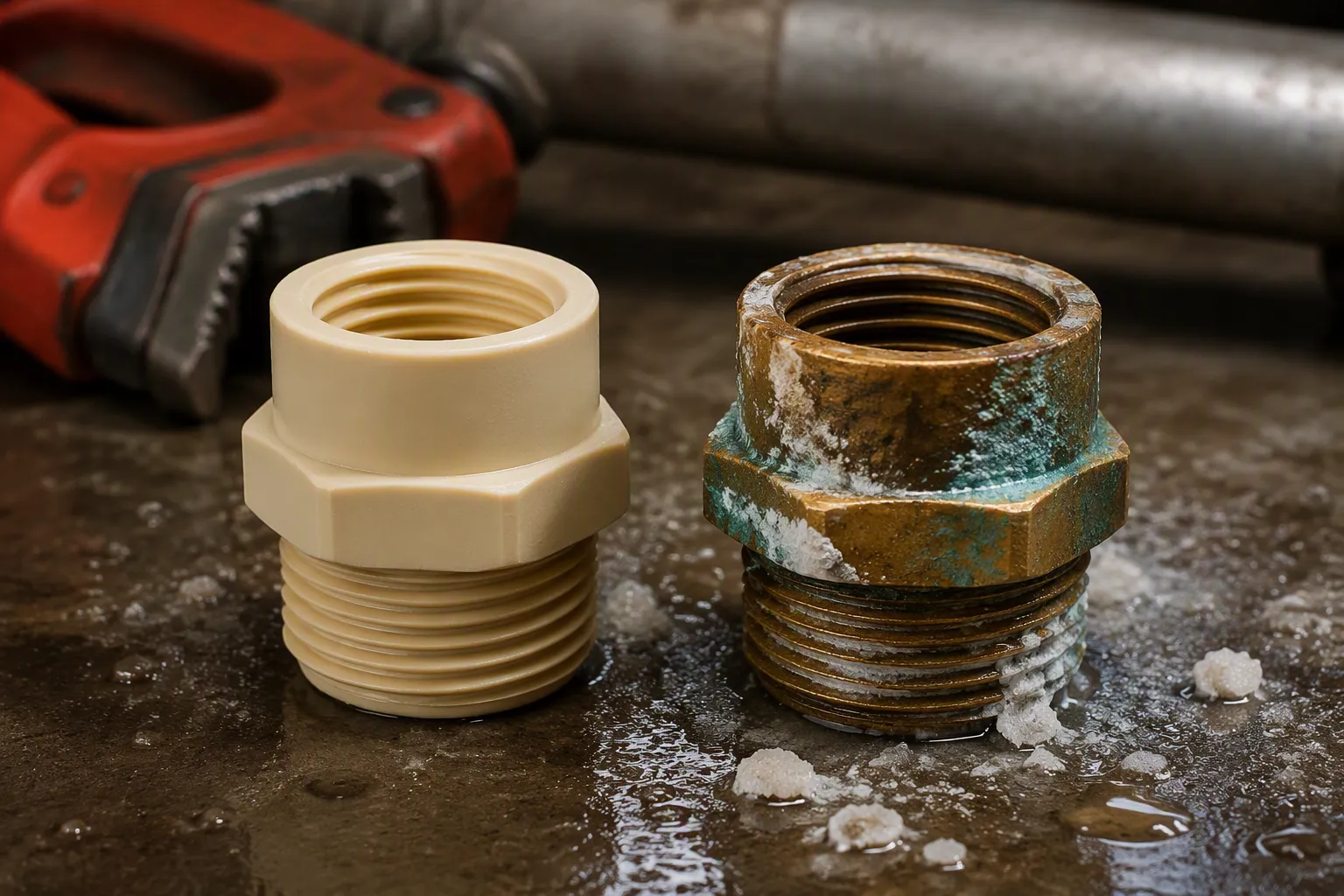
PPSU delivers a material advantage that brass cannot match. The polymer is inherently corrosion-proof, even surpassing metal alloys. PPSU press fittings are also less prone to scaling compared to brass alternatives. You can use the material safely in plumbing systems regardless of water hardness. As stated by Pipelife's Business Development Manager Stephan Müller, "PPSU fittings can be used with a broader range of drinking waters regardless of their corrosivity." This corrosion resistance eliminates the risk of dezincification that plagues brass fittings in aggressive water conditions.

The long-term reliability extends to the system's cost profile. Consider the comparison between a standard polymer system and a PEX-AL-PEX system, which mirrors the performance of PPSU-based systems:


Cost/Risk Variable

Standard Polymer System

PEX-AL-PEX System

Initial Material Cost

Baseline (1.0x)

Premium (1.2x – 1.3x)

Chemical Inhibitor Needs

High (annual dosing)

Low (initial fill only)

Boiler Corrosion Risk

High (10-15 years)

Negligible (>30 years)

20-Year Lifecycle Cost

1.8x – 2.5x

1.3x – 1.4x


The premium initial investment pays back through lower maintenance and longer equipment life. You spend less on chemical inhibitors and face negligible boiler corrosion risk over three decades.

The versatility of the system matches its reliability. You specify PPSU press fittings for potable water systems in both residential and commercial buildings. They handle hot water supply lines and underfloor heating systems with equal performance. Radiant heating applications benefit from the material's resistance to thermal cycling. The same fittings serve cooling systems without modification. This single-system approach simplifies inventory management and reduces the chance of installing the wrong component. The fittings work with multiple pipe types, giving you design flexibility across different project requirements.


PPSU press fittings solve plumbing's three biggest challenges: time, safety, and long-term reliability. You gain faster installation without fire risk or toxic chemicals. The material's corrosion resistance ensures decades of dependable service. This combination makes them ideal for potable water and hydronic heating systems.

Consider these fittings for your next project. Complete systems from TOP AQUA deliver the performance and reliability you need.


FAQ

Can PPSU press fittings connect to existing metal or PEX pipes?

Yes. These fittings work with multiple pipe types, including PEX and multilayer composite pipes. You maintain design flexibility when retrofitting older systems or building new installations.

What pressure and temperature ratings should you expect?

PPSU press fittings maintain seal integrity during sanitation cycles up to 95°C at 10 bar operating pressure. Manufacturers project service life exceeding 50 years under these demanding conditions.

Do you need special training to install these fittings?

You need basic instruction on the five-step process: cut, deburr, mark, assemble, and press. The Go/No-Go gauge verifies each joint, eliminating guesswork and ensuring consistent quality.

PPSU Fittings vs Brass Fittings Which Plumbing Connection System Is Better?

Choosing between PPSU fittings vs brass fittings for your plumbing project presents a genuine challenge. No universal winner exists. Your decision hinges on water chemistry, budget, and installation skill. This comparison examines durability, corrosion resistance, temperature ratings, and cost. Contractors report brass costs 20% to 40% more per unit. Switching a 2,000-square-foot build to PPSU fittings reduces material expenses by 15% to 25%. Consider best plumbing fittings material carefully. We provide unbiased, data-backed guidance for selecting your durable pipe connection system.


Key Takeaways

  • PPSU fittings resist corrosion and scale. They cost less than brass fittings.

  • Brass fittings handle higher temperatures and pressures. They work best in underground or high-impact areas.

  • Test your water chemistry before choosing. PPSU suits hard water; brass needs proper pH levels.


PPSU Fittings vs. Brass: Material Fundamentals

Defining PPSU and Its Key Properties

PPSU (polyphenylsulfone) is a high-performance thermoplastic engineered for demanding plumbing applications. You will find it increasingly common in push-to-connect and press-fit systems for PEX piping. This material delivers a remarkable combination of lightweight construction and structural integrity. PPSU fittings exhibit a typical tensile strength range of 70–80 MPa, which proves sufficient for internal fluid pressure in residential and commercial piping systems.

The chemical resistance of PPSU deserves your attention. It withstands weak acids and weak alkalis without degradation. Strong acids present limited resistance, so you should verify compatibility before exposure. This chemical resilience makes PPSU fittings particularly valuable in areas with aggressive water chemistry. Unlike metal alternatives, PPSU will not corrode or scale over time, which extends the service life of your entire plumbing network.


Chemical Category

PPSU Resistance Rating

Weak Acids

Resistant

Strong Acids

Limited resistance

Weak Alkalis

Resistant

Strong Alkalis

Not rated


Defining Brass and Its Traditional Strengths

Brass, a copper-zinc alloy, has served plumbing systems for generations. Its reputation rests on mechanical strength and resistance to cracking under pressure and heat. The tensile strength of brass exceeds 300 MPa, far surpassing PPSU. Free-cutting brass per ASTM C36000 reaches 338–469 MPa ultimate tensile strength. This substantial margin explains why engineers often specify brass for high-stress environments.

The copper-zinc ratio determines brass's workability. Yellow brass, approximately 65% copper and 35% zinc, serves as the standard reference for plumbing fittings. Higher copper content enhances ductility, while increased zinc improves strength but reduces formability.

Yellow Brass (65/35 Brass) is explicitly identified for plumbing fittings, with a composition of approximately 65% copper and 35% zinc. This specific ratio is the standard reference point for plumbing applications.

Brass fittings typically appear in threaded and crimp connections. You will find them specified where mechanical robustness matters most. The material's ability to withstand repeated assembly and disassembly cycles makes it a dependable choice for accessible connection points.


Durability and Corrosion Resistance

Durability and Corrosion Resistance


PPSU's Immunity to Corrosion and Scale

PPSU fittings deliver a decisive advantage in challenging water environments. The polymer structure resists chemical interactions with dissolved minerals and soil-based compounds. Hard water with high mineral content will not cause surface scaling or internal degradation. Connection points remain structurally sound throughout their service life.

Your domestic hot water system benefits directly from this resilience. PPSU fittings operate reliably at 180°F (82°C) continuously. Testing at 70°C demonstrates a lifespan exceeding 20 years. This performance surpasses PEX at 10-15 years and CPVC at 8-12 years. With proper installation, you can expect 50+ years of service. That duration matches or exceeds the lifespan of most residential buildings.

PEX PPSU fittings can last for decades without significant wear or degradation, and the PPSU material withstands temperatures up to 180°C (356°F) without losing strength or structural integrity.


The following comparison illustrates how PPSU handles aggressive water conditions:


Property

PPSU (Plastic)

Brass

Scale buildup resistance

High – resistant to scale buildup

Lower – susceptible to corrosion over time

Corrosion resistance

High – resists corrosion

Moderate – corrodes in acidic or high-chlorine water

Suitability for hard water

Ideal for high mineral content

Less ideal; prone to degradation

Structural integrity

Stable under normal conditions

Stronger but can fail due to corrosion


Brass's Vulnerability to Corrosion and Water Quality

Brass fittings face a specific failure mechanism called dezincification. Zinc dissolves from the alloy, leaving a porous copper structure. This process weakens the fitting and eventually causes leaks. The ISO 6509 standard governs testing for this vulnerability. Minor alloying additions of arsenic, antimony, or phosphorus prevent dezincification in brasses with zinc content up to 36%. Above that threshold, beta phase formation negates any protective effect.


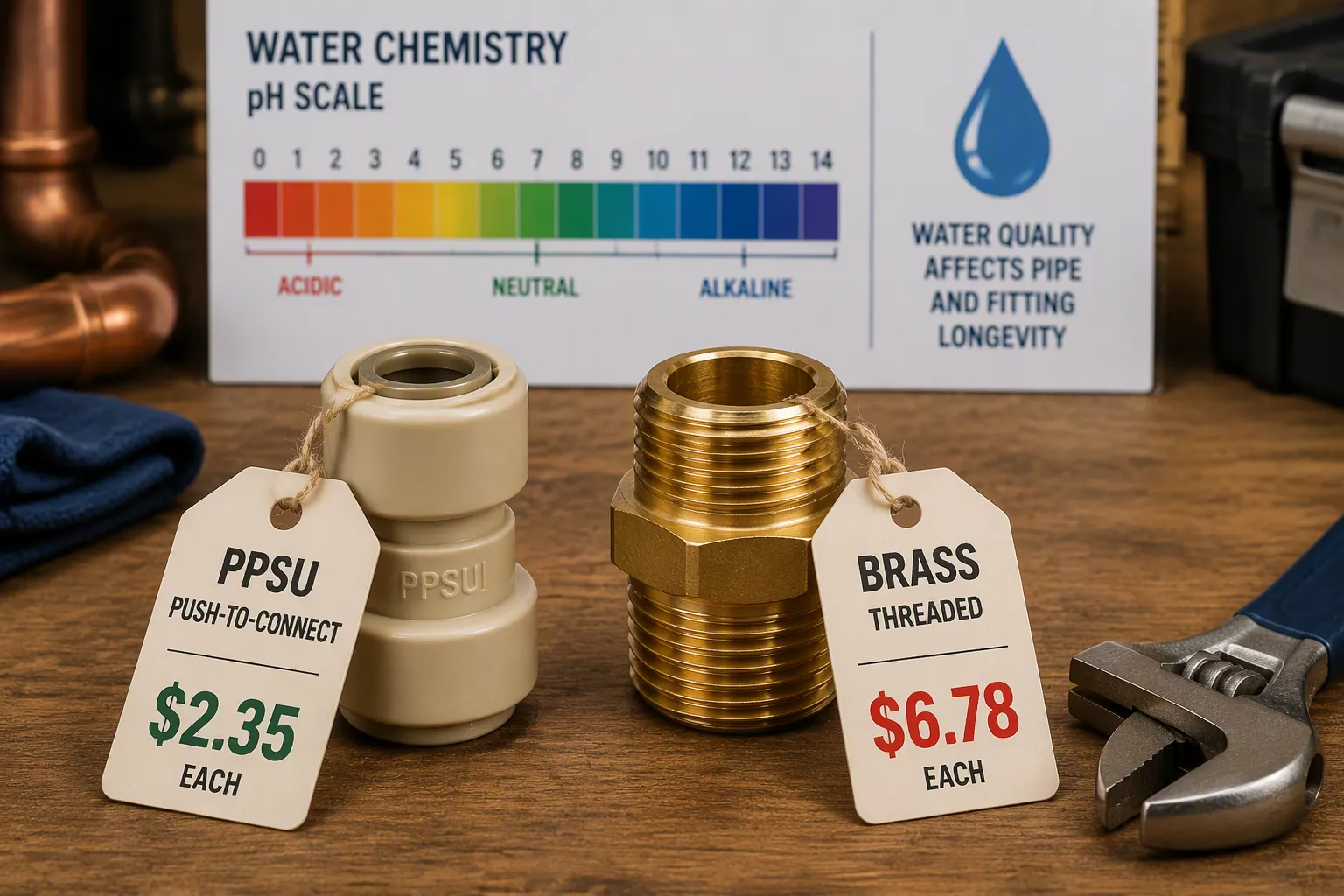
Your water chemistry determines the corrosion risk. The pH level directly influences how brass behaves:


pH Range

Corrosion Type/Effect

Below 6.5

Uniform corrosion (highly corrosive due to hydrogen ion concentration)

6.5 – 8.0

Pitting corrosion (more localized attack)

Above 8.0 (with alkalinity)

Protective scale formation possible if LSI is slightly positive


Acidic water below pH 7 triggers dezincification most aggressively. The EPA recommends adjusting pH so the Langelier Saturation Index sits slightly positive. This typically means slightly alkaline water above pH 7. However, highly alkaline conditions create scale deposits that restrict flow and cause blockages.

Corrosion products can also affect your water quality. Metallic taste often signals active corrosion. Lead content in some brass alloys poses additional concerns for potable water systems. These factors make brass fittings less predictable in regions with variable water chemistry.

The durability comparison between PPSU vs brass fittings ultimately depends on your local water conditions. For homeowners seeking the best plumbing fittings material, PPSU offers maintenance-free longevity. Brass provides mechanical strength but demands careful water quality monitoring. Your choice of durable pipe connection system should account for these corrosion dynamics.


Temperature, Pressure, and Installation

Comparing Temperature and Pressure Ratings

Temperature and pressure ratings define the safe operating envelope for any plumbing fitting. PPSU fittings carry a maximum pressure rating of PN20 (150 psi). Brass reaches PN25 (200 psi). The higher brass rating supports installations near pressure vessels or commercial systems where pressure spikes occur. For standard residential plumbing, both ratings exceed typical requirements.

Continuous temperature ratings also differ between the two materials. PPSU handles 95°C continuously per standard ratings. The ASTM F877 standard provides a higher rating for the material itself:

The material is capable of continuous service temperatures up to 180°C (356°F).

Brass extends to 120°C continuous. This higher rating makes brass suitable for high-heat applications like boiler connections where temperatures exceed typical residential hot water. You should verify your system temperature before selecting fittings.


Property

PPSU

Brass

Maximum pressure rating

PN20 / 150 psi

PN25 / 200 psi

Continuous temperature rating

95°C

120°C

Coefficient of thermal expansion

5.5 × 10⁻⁵ /°C

1.7 × 10⁻⁵ /°C

Thermal expansion affects long pipe runs significantly. PPSU expands at 5.5 × 10⁻⁵ /°C. Brass expands at 1.7 × 10⁻⁵ /°C. The lower expansion rate of brass means less movement in straight sections. You need fewer expansion loops with brass fittings. This factor matters most in long horizontal runs where pipe movement can stress connections over time.


Ease of Installation and Connection Methods

PPSU Fittings simplify installation considerably. Push-to-connect and press-fit systems require no special tools. You insert the pipe, press the fitting, and the connection seals instantly. This simplicity appeals to DIYers and reduces labor time for professionals. No soldering or threading means fewer opportunities for mistakes during installation.

Brass demands more skill and specialized equipment. Threaded connections require precise cutting, Teflon tape, and careful tightening to avoid leaks. Soldering needs a torch, flux, and steady hands. Crimping requires a dedicated tool and proper calibration. Each method introduces potential error points and increases installation time significantly.

The lightweight nature of PPSU reduces fatigue during overhead work. Brass fittings weigh significantly more, straining wrists and arms during extended installation sessions. For homeowners evaluating the best plumbing fittings material, the ease of PPSU installation often tips the scale toward this modern option. The reduced labor cost also makes PPSU an attractive choice for budget-conscious projects.


Cost Analysis and Key Selection Factors

Cost Analysis and Key Selection Factors


Cost Comparison: Initial Price vs. Lifespan

PPSU Fittings typically cost nearly half the price of equivalent brass components. This price difference affects your project budget immediately. A 2,000-square-foot residential build saves 15% to 25% on material expenses by choosing PPSU over brass. Those savings compound with reduced labor costs. PPSU push-to-connect systems install faster than threaded or soldered brass connections. The lightweight nature of PPSU also reduces shipping and handling expenses compared to heavier brass alternatives.

Lifespan considerations balance the initial price gap. PPSU fittings deliver 50+ years of service in standard residential conditions. Brass fittings match or exceed this duration but require favorable water chemistry to do so. The total cost of ownership favors PPSU for most homeowners. The best plumbing fittings material for budget-conscious buyers is PPSU, provided the application does not demand extreme temperature or pressure tolerance. Evaluating PPSU vs brass fittings requires looking beyond the price tag to consider long-term maintenance costs.


Factors to Consider for Your Specific Project

Your local water quality determines the safe operating range for brass fittings. The table below outlines the parameters that influence corrosion risk:

Parameter

Safe / Low Risk Range

Unsafe / High Risk Range

Recommended Action

pH

7.0 – 8.5 (neutral to slightly alkaline)

Below 6.5 or above 9.0

Use neutralizing filter for low pH; always select DZR brass

Hardness

Moderately hard (protective scale forms)

Very soft water

DZR brass is essential in soft water areas; hard water adds natural protection

Water chemistry directly controls dezincification rate. DZR brass performs best at pH 7–8.5 with moderate hardness (which forms a protective scale) and low chloride. Extreme pH or very soft water will challenge even resistant alloys over decades.

Your budget shapes the material choice. PPSU fittings offer lower upfront cost and reduced installation labor. Brass demands higher initial investment but delivers proven mechanical strength for demanding applications. Calculate your total project cost including materials, labor, and potential future replacements.

Your installation skill matters. PPSU push-to-connect systems allow DIY installation without specialized tools. Brass connections require soldering, threading, or crimping experience. Professional plumbers handle brass efficiently, but homeowners face a steeper learning curve.

Your specific application guides the final decision. Underground PEX B installations benefit from brass fittings due to their superior crush resistance. Exposed connections in mechanical rooms also favor brass for its durability against accidental impact. PPSU Fittings excel in standard wall cavities and crawl spaces where corrosion resistance matters most.

Reputable brands like TOP AQUA offer both PPSU and brass options. A durable pipe connection system combines both materials where each excels. Matching the fitting material to the specific environment ensures long-term reliability.


PPSU vs. Brass: A Quick Reference Comparison Table

This table distills the PPSU vs brass fittings analysis into a scannable format. You can reference it during material selection or when discussing options with a contractor. Each attribute reflects the detailed evidence presented throughout this guide.

Attribute

PPSU Fittings

Brass Fittings

Corrosion Resistance

Complete immunity to corrosion, rust, and scaling

Susceptible to dezincification in acidic or high-chlorine water

Temperature Rating

95°C continuous rating

120°C continuous rating

Pressure Rating

PN20 / 150 psi

PN25 / 200 psi rating

Ease of Installation

Push-to-connect or press-fit; no special tools required

Requires soldering, threading, or crimping with specialized equipment

Initial Cost

Approximately half the cost of equivalent brass components

20% to 40% higher per unit

Long-Term Value

50+ years of maintenance-free service in standard conditions

Matches PPSU lifespan only with favorable water chemistry

Best Use Case

Residential wall cavities, crawl spaces, hard water regions

Underground PEX B, boiler connections, high-impact areas

Manufacturer certifications confirm PPSU's capability for standard residential service. PPSU press fittings are rated for a maximum working temperature of 95°C and a maximum working pressure of PN20 (150 psi). These figures cover both hot and cold water applications. Brass extends to 120°C continuous, which explains its specification for boiler connections and high-heat environments.

Your selection of the best plumbing fittings material depends on matching these attributes to your project conditions. PPSU delivers superior corrosion resistance and lower cost. Brass provides higher temperature tolerance and mechanical strength. Neither material outperforms the other across every category.

A durable pipe connection system combines both materials strategically. Use PPSU for standard wall installations where water chemistry poses corrosion risks. Specify brass for underground runs or mechanical rooms where impact resistance matters. This hybrid approach maximizes the strengths of each material while minimizing their respective limitations.


Your PPSU vs brass fittings decision ultimately hinges on project priorities. Choose PPSU for corrosion immunity, simpler installation, and lower cost. Select brass for extreme temperatures or underground durability. No single best plumbing fittings material exists. Evaluate your water chemistry, budget, and skill level. Consult a local plumber or trusted brands like TOP AQUA to finalize your durable pipe connection system.


FAQ

How Long Do PPSU Fittings Actually Last?

PPSU fittings deliver 50+ years of service in standard residential conditions. Testing at 70°C demonstrates a lifespan exceeding 20 years. This duration matches or exceeds most building lifespans, making PPSU a genuinely durable pipe connection system.

Can You Mix PPSU and Brass Fittings in One System?

Yes. Many professional installations combine both materials strategically. Use PPSU in wall cavities where corrosion resistance matters. Specify brass for underground runs or boiler connections requiring higher temperature tolerance. This hybrid approach maximizes each material's strengths.

Do PPSU Fittings Meet Plumbing Code Requirements?

PPSU fittings carry PN20 pressure ratings and 95°C continuous temperature ratings. These specifications satisfy standard residential code requirements. Always verify local code compliance before installation. Manufacturers like TOP AQUA provide certification documentation. This makes PPSU the best plumbing fittings material for most residential applications.

The characteristics and applications of carbon steel tube sheets

Forged Carbon Steel Tube Sheet Specific Material

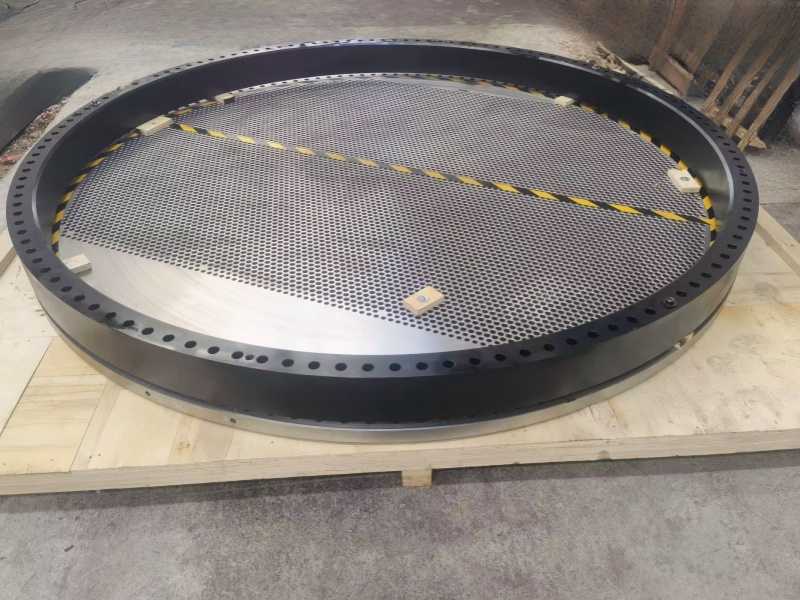
Forged carbon steel tube sheets are typically made from carbon steel materials such as ASTM A105 tube sheets or ASTM A350 LF2 tube sheets. Carbon steel is chosen for its high strength and excellent machinability, making it suitable for high-temperature and high-pressure environments.


Forged Carbon Steel Tube Sheet Production Standards

The production of forged carbon steel tube sheets typically complies with relevant standards such as ASME (American Society of Mechanical Engineers) or international standards. These standards ensure product quality and performance, including material strength, dimensional accuracy, and weldability.


Forged Carbon Steel Tube Sheet Dimensions

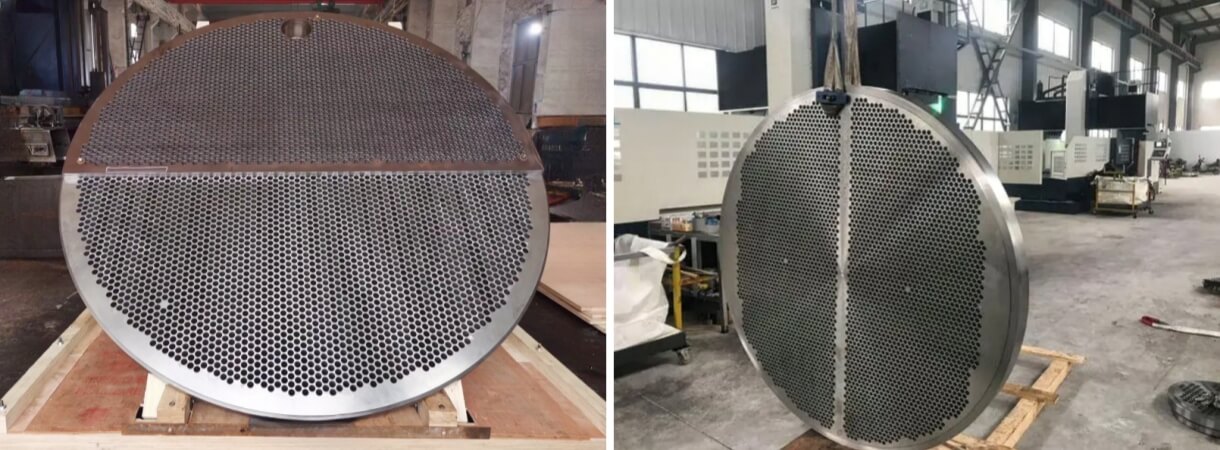
The dimensions of forged carbon steel tube sheets depend on specific design and application requirements. Typically, the diameter and layout of tube holes, plate thickness, and overall dimensions vary based on the specifications and functions of the equipment.

 Chiller Tube Sheet


Forged carbon steel tube sheets are commonly used in the following applications

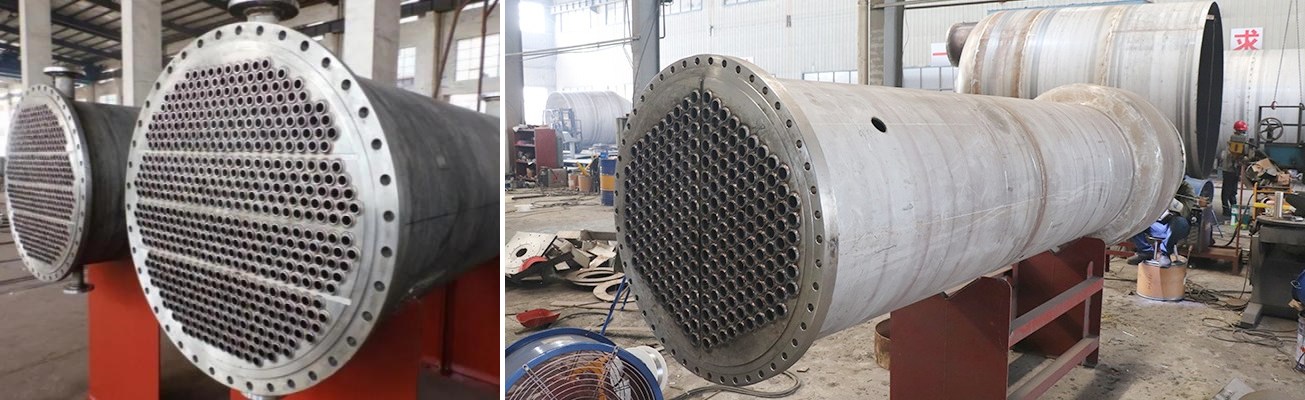
1.Heat Exchangers: A heat exchanger is an equipment that utilizes the heat transfer of fluid inside the pipe for energy conversion. Carbon steel tube sheets are often used as materials for pipes and heat exchanger bundles in heat exchangers, with high corrosion resistance and pressure bearing capacity.


2.Boilers: Carbon steel tube sheet is also one of the most important materials in the manufacturing of boilers, and is generally used for the tubes and some structural components of boilers. Due to its excellent mechanical properties, strength, and high corrosion resistance, carbon steel tubesheets can ensure the safe operation of boilers.


3.Chemical Industry: In petrochemical equipment, carbon steel tube plates are often used as materials for catalyst tubes, distillation towers, reactors, and other devices. Due to its excellent corrosion resistance and reliable pressure bearing capacity, carbon steel tube plates ensure the safety of petrochemical equipment.

 tube sheet for heat exchangers


Forged Carbon Steel Tube Sheet Advantages

1. High Strength: Carbon steel offers excellent strength, enabling it to withstand high-temperature and high-pressure conditions.

2. Excellent Machinability: Carbon steel is easy to forge, cut, and weld, making it suitable for various complex-shaped tube sheets.

3. High-Temperature Resistance: Carbon steel tube sheets are well-suited for high-temperature environments, making them ideal for use in boilers and heat exchangers.

4. Corrosion Resistance: While susceptible to corrosion, carbon steel tube sheets can still be used in corrosive environments with proper coatings and protection.

carbon steel tube sheet


Forged Carbon Steel Tube Sheet Processing Steps

1. Raw Material Preparation: Select suitable-quality carbon steel billets.

2. Forging: Heat the billets to the appropriate temperature and shape them through forging processes, using hammering or pressure to achieve the desired shape.

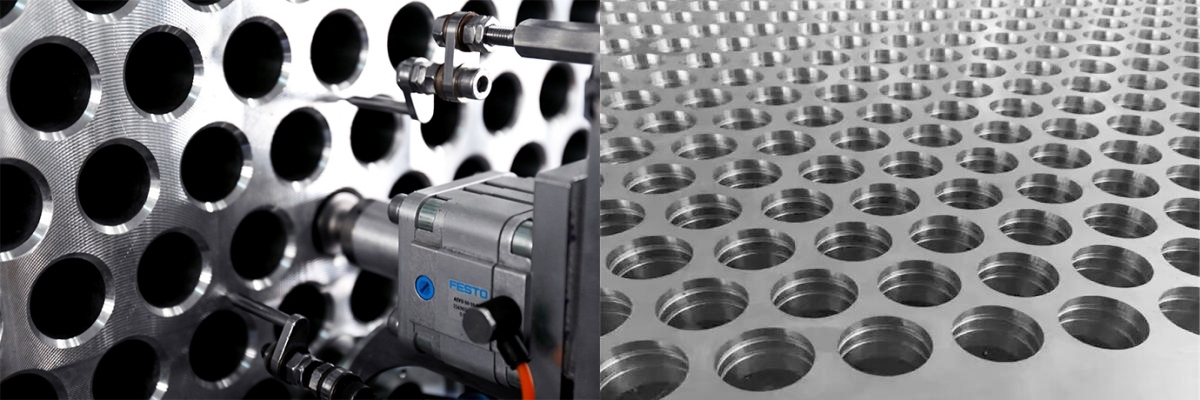
3. Machining and Hole Drilling: Cut and drill tube holes, ensuring accurate dimensions and hole positions.

4. Inspection and Quality Control: Conduct non-destructive and destructive testing to ensure that the tube sheet meets specifications and standards.

5.  Surface Treatment: Surface treatments, such as corrosion-resistant coatings, may be applied to enhance corrosion resistance.


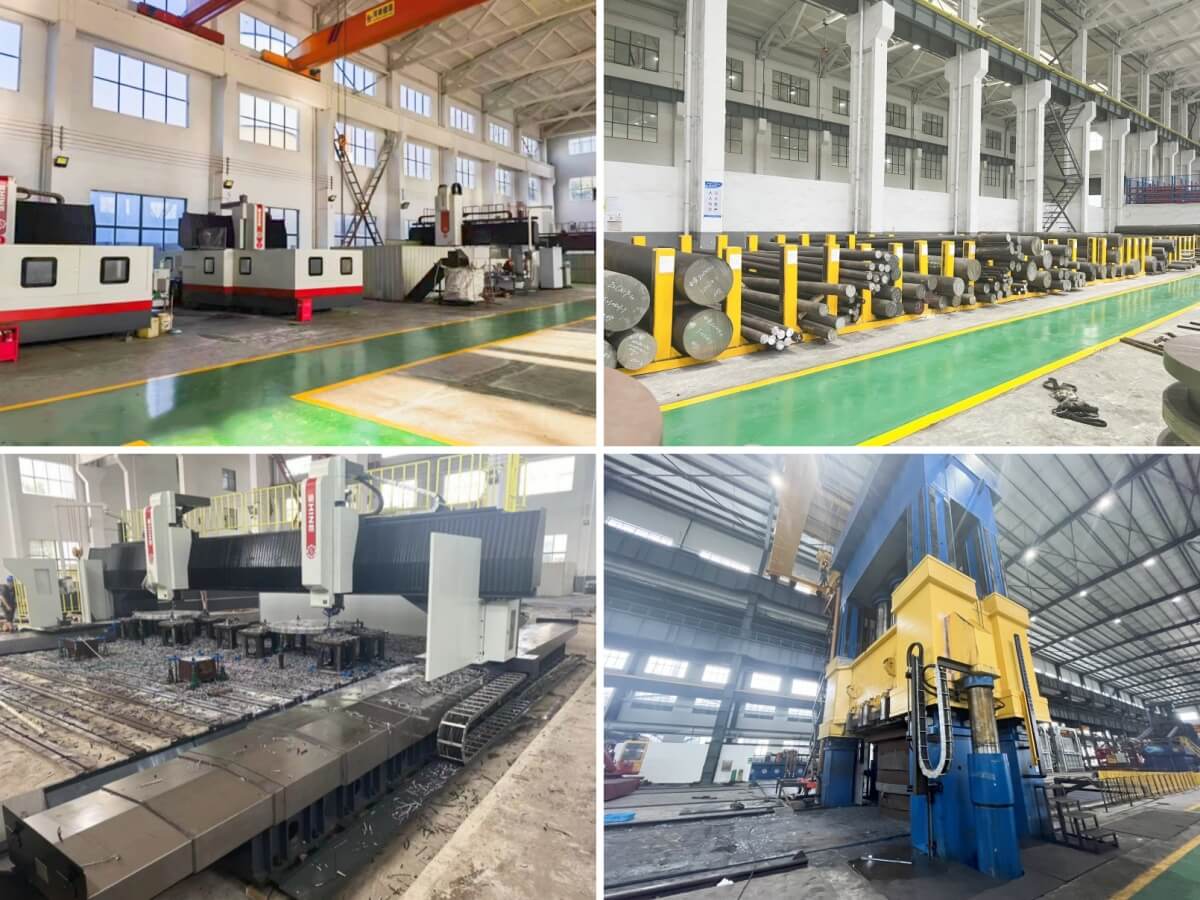
Wuxi changrun has equipped facilities for manufacturing. Now it has five forging machines, one of which is forging machine whose capacity reaches 3600-ton, one is numerical control ring roll whose capacity reaches 6300 mm (Diameter), one is 1.5 ton hammers and the other two are 1-ton air hammers. There are 7 gas generators used for forge heating, 16 industrial resistance furnaces for heat treatment and more than 80 metal processing equipment among which there is a numeric control Standing Lathe whose processing diameter can reach 5meters. The company has an annual production capacity of 50,000 tons of middle and high-pressure flanges and various steel forgings for boilers and pressure vessels. The maximum pressure of manufactured flanges can reach 2500Lb, the maximum diameter can reach about 6 meters and the maximum weight of unit forging can reach 30 tons.

tube sheet manufacturer


Conclusion

Forged carbon steel tube sheets play a crucial role in heat exchange and heating equipment, offering strength and high-temperature resistance. Their manufacturing requires precise craftsmanship and quality assurance to ensure equipment safety and reliability.


Wuxi Changrun has provided high-quality tube sheets, nozzles, flanges, and customized forgings for heat exchangers, boilers, pressure vessels, etc. to many well-known petrochemical enterprises at home and abroad. Our customers include PetroChina, Sinopec, Chevron, Bayer, Shell, BASF, etc. Send your drawings to sales@wuxichangrun.com We will provide you with the best quotation and the highest quality products.

tube to tube sheet