Notices for installation and use of bellows sealed valves

Notes before installation

Before installation, check carefully whether the valve’s model, designed pressure and caliber meet the requirements. Make sure the arrowmark on the valve point at the flow direction of the pipe medium.


Before installation, make sure the chamber and sealing surface are clean, check the sealing surface, bolt connection, packing compression, stem rotation, etc.


The valve on horizontal pipeline, its stemis betterto be vertically upward. Downward stem not onlybarsoperation, maintenance,but also hurtsthe valveitself .


The valve installed on the pipeline should have the space for operation, maintenance and disassembly. The reserved space of handwheel should not be less than 100mm.


For flanged end valves, users should select bolts and gaskets according to the temperature, pressure and medium, and tighten the connecting bolts and nuts evenly.


For valves with butt-end construction, customers shall weld and heat-treat according to standard requirements. Welding shall be performed by qualified personnel and shall be performed only after process qualification.


Pay attention to the location indicator while open and close valve. Overuse of "F" wrench can easily lead to distortion of bellows and damage of internal parts.


Notes for installation

After the installation of the valve, when the medium temperature is greater than 100℃, the packing gland should be gently open, fully evaporating the water in the cavity formed by the bellows and packing, and then tight on the packing gland.


Bellows sealed globe valves,bellows sealed gate valvesmust be full open or closed during system or line pressure test. They are not allowed tot be partially opened to regulate flow.


Usually bellows sealed valves do not have an insulated part.so that do not touch the surface of the valve when the medium is a high or low temperature fluid.


The surface and moving parts of the valve, such as the trapezoidal threads of the valve stem and the valve stem nut, the sliding parts of the valve nut and support, are easy to accumulate dust, oil stains and residual media stains, which are easy to cause wear and corrosion of the valve and even generate friction heat, this is very dangerous to combustion gas, should be regularly cleaned according to the working conditions.


If there is water in the valve cavity, in the case of low temperature (such as the medium is liquid nitrogen), bellows sealed valves are easy to damage. Water should be drained before installation to avoid icing.


Xiamen Dervos is a leading valve maker and trader in Xiamen, southeastern China. Our wide range of high-quality products include gate valves, ball valves, shut-off pig valves, butterfly valves, and other engineered products for the oil and gas industry. For more information regarding our products, contact us today.

The Advantages of V-type Ball valves

The V-type ball valve combines the optimal control characteristics of the ball valve and the butterfly valve. Its development is closely related to the advancement of technology. Today, the product is widely used because it has the following advantages.
(1) The integral valve body, without any pipe flange joints, avoids the influence of pipe or bolt stress on the sealing performance of the valve body. Because the valve body does not have any pipe joints, the pressure-resistant casing is not subject to pressure “mutation”;


(2) A V-type ball valve has a V-shaped valve core, which can ensure the accuracy of control over the entire measuring range even in the case of small flow or high viscosity medium;


(3) The leak-proof and durable valve seat of the V-type ball valve is lined with a PTFE cup or O-ring with a stainless steel inner core at its outer diameter. The valve seat is made of stellite carbide with a large cross section. ;


(4) When the V-type ball valve is closed, the V-notch and the valve seat produce a strong shearing action, and have a self-cleaning function to prevent the core from being stuck, so the pneumatic V-type ball valve is particularly suitable for the fluid that freezes in a pipeline or contains fibers and particulate solids.

The Reasons for the Aging of Rubber Seals

Rubber seals are widely used in the valve sealing, for their excellent properties such as waterproof, flame retardant, high temperature resistance, electrical conductivity, wear resistance and oil resistance. Rubber seals, as indispensable fittings for seal valves such as forged bellow seal valves, also meet EU environmental protection standards.


Four main reasons for the aging of rubber seals are as follows:
1. Ultraviolet Light
The high energy of ultraviolet light will damage the rubber seal by initiating and accelerating the oxidation chain reaction process. For those with high gel content, there will be reticular cracks on both sides, so-called "outer layer cracking".


2. Ozone
The chemically active oxygen of ozone is much higher and more destructive. It also breaks the molecular chain of rubber, but the effect of ozone on rubber varies with the deformation of rubber. When Ozone acts on the rubber with deformation (mainly unsaturated rubber), there will be a crack which is straight in the direction of stress, that is, "ozone cracking"; when it acts on a undeformed rubber, only an oxide film is formed on the surface without cracking.


3. Moisture
There are two aspects to the effect of moisture: silicone rubber products are easily destroyed when exposed to humid air or when immersed in water. However, under certain circumstances, moisture does not have a destructive effect on rubber, and even has the effect of delaying aging.


4. Mechanical Stress
Under the repeated action of mechanical stress, the rubber molecular chain will be broken to form free enthalpy, which will initiate the oxidative chain reaction and form a force chemical process. In addition, it is easy to cause ozone cracking under stress.


The working of ball valve

Ball valves are usually found in controlling the flow of high-weight fluids and gas lines. This is because that these valves don’t reduce the flow weight and limit liquid flow. Ball valves are dominantly put in where the supply pipe’s internal breadth is 6 inches or less.


A ball valve is a valve used to divert the flow. When open, it gives access to the medium and when closed, it cuts off the medium. It is named ball valve because of the ball-shaped disc in its cavity.

They are used in many fields because they are easy to repair and able to bear weight and temperature. Ball valves can withstand to 10,000 pounds per square inch and up to 200 degrees Celsius. Ball valves range from quarter-inch to one foot wide or larger.


Types of Ball Valve

There are various kinds of ball valves. The path of the full-bore valve is as same wide as the pipe the valve appended to. This design prevent the flow being impeded. On the contrast, The reduced-bore valve has opening on the ball that is narrow than the pipe. This makes less water stream. A trunnion mounted valve has a pin holding the ball so it doesn't vibrate. There are three- and four-path valves, too. With these valves, the flow is controlled by the position of the ball.


Efficiency

A Dervos ball valve can offer you the perfect seal. There won’t be any spillages when the ball valve are totally shut-off. Because of its extremely straightforward structure, ball valves are more modest and lighter contrasted with other types of valves. Ball valves owns delicate seals which make it simple. What’s more, comparing with all sorts of valves, ball valves boost the most modest level of liquid safety.

Try Spring Loaded Check Valve Next Time

Every heating contractor moving into an empty boiler room ---- This room is usually the size of a small closet ---- must have his piping system outlined in his mind around the type of boiler and heat distribution system he will be installing. One of the main criteria for determining the plumbing configuration is the little check valve.


First, let's look at the three most common types of check valves:lift plunger, swing check, and spring-loaded check valves.


The Lift check valves in intermittent circulation systems are designed to prevent gravity circulation of the heat source when the circulator is in the off position.


The swing check valve allows water to flow in one direction only. It does not prevent gravity circulation. It is mainly used to prevent different circulator consumer circuits from interacting with each other and it eliminates the short circuit problem. Depending on the layout of the system, the water always tries to take the path of least resistance. The swing check valve allows the circulator to deliver water in only one way as the system is designed.


If, however, opposite forces of a second circulator are at times almost equal, pushing against the flow direction of the swing, annoying chattering of the valve will occur with the valve flapper being pushed back and forth rapidly by two opposing pump forces fighting each other.


Bothlift and swing check valves have two disadvantages: they are large and bulky, and can only be installed upright in horizontal piping.


For every flow check valve or spring check valve, a heating contractor needs in a system, he must provide a short horizontal pipe run. This almost always requires additional elbow fittings, increased labor, and use of valuable space.


One solution I have found to be very useful is the spring check valve. Every plumber who installs well systems is familiar with this clever little spring check that will make a heating contractor's day a lot better. It can be installed in any position. Horizontally, vertically, right side up, or upside down. It's very compact, with a 1-inch valve about 2 inches long. It is about half the price of a free check. It is non-ferrous and can be used for heating and plumbing.


It is available both as a directional rotary check valve and as a gravity flow check valve in sizes ranging from 3/8 inch to 3 inches. The spring check valve is particularly useful in installations where piping space is limited (which is not uncommon). The number of check valves required in a particular system can vary. Constant cycle systems essentially eliminate check valves to the point where only spring-loaded check valves are needed between the storage tank and boiler to prevent gravity circulation, and between the boiler and mixing valve to prevent short circuits through the 3-way or 4-way valve.


There is no need for a check valve on the heat distribution side of the mixing valve because the pump never shuts off and the mixing valve completely isolates the boiler from the radiation of the hydraulics during non-heat-demanding conditions. Intermittent cycle systems with multiple zone circulators require a gravity check for each zone. Spring checks have proven to be reliable and effective. Try using one on your next stressful job. They may be just the solution you've been looking for.


Valve salt spray test

As we all know that the valve body like carbon steel (WCB, WCC, LCB, LF2, A105), stainless steel (SS304, SS316, F304L, F316L), hastelloy (Alloy 20) etc., or even in the trim material always use metallic materials.


Most of the corrosion of metallic materials occurs in the atmosphere, which contains corrosive components and corrosive factors such as oxygen, humidity, temperature changes and pollutants. Salt spray corrosion is a common and most destructive atmospheric corrosion.


The salt spray test is divided into two categories, one is the natural environmental exposure test, and the other is the artificial accelerated simulated salt spray environmental test. The artificial simulated salt spray environment test uses a test equipment with a certain volume space, the salt spray test chamber, to artificially use the salt spray environment in the volume space to assess the salt spray corrosion resistance quality of the product.


Compared with the natural environment, the salt concentration of the chloride in the salt spray environment canbe several times or dozens of times that of the salt spray content of the general natural environment, so that the corrosion rate is greatly improved, and the product is subjected to a salt spray test to obtain a result. The time is also greatly shortened. If a product sample is tested in a natural exposure environment, it may take 1 year to corrode, and in a simulated salt spray environment, as long as 24 hours, similar results can be obtained.


When Should a Y-Type Filter Be Selected?

Y-type filters are widely utilized across various industrial sectors, including petroleum, chemicals, pharmaceuticals, food processing, water treatment, and more. These filters effectively remove impurities and particulate matter from fluids, safeguarding downstream equipment from contamination and damage while enhancing product quality and production efficiency. Here are some specific scenarios where Y-type filters are ideally suited:

Y Type Strainer

1. Industry Applications:

(1) Chemicals and Petrochemicals: In chemical and petrochemical processes, Y-type filters filter weakly corrosive materials such as water, ammonia, oils, hydrocarbons, etc., to eliminate impurities and solid particles, protecting production equipment and enhancing product quality.

(2) Oil and Petrochemical Industry: Used for filtering liquids like crude oil, fuel oil, and lubricants, ensuring smooth equipment operation and improving product purity and quality.

(3) Pharmaceutical Industry: In pharmaceutical production, Y-type filters purify solutions, liquids, and slurries, removing impurities and particles to guarantee product purity and quality.

(4) Food and Beverage Industry: During food processing and beverage production, Y-type filters filter juices, beer, milk, drinking water, etc., eliminating suspended solids, microorganisms, and other contaminants, ensuring product hygiene and safety.

(5) Microelectronics Industry: In microelectronics manufacturing, Y-type filters filter chemical solvents, cleaning solutions, etc., in the semiconductor industry, ensuring product quality and smooth operation of manufacturing equipment.


2. Filtration Needs:

(1) Equipment Protection: When fluids contain solid particles, these can clog or damage critical equipment like pipes, pumps, nozzles, and instruments. Y-type filters effectively block these particles, protecting equipment from damage.

(2) System Reliability Enhancement: By filtering impurities from fluids, Y-type filters improve overall system reliability and stability, reducing failures and downtime caused by contaminants.


3. Applicable Media:

Y-type filters are suitable for various media, including water, oil, gas, and corrosive substances, making them widely applicable in fluid processing across industries.


4. Selection Considerations:

When selecting a Y-type filter, factors such as flow requirements, filtration accuracy, media properties, and working pressure must be considered to ensure the appropriate model and specifications are chosen. Different Y-type filter models (e.g., GL11W threaded stainless steel Y-type filter, GL41H flanged stainless steel Y-type filter) have distinct characteristics and application scopes, requiring selection based on actual needs.


Y-type filters are appropriate when filtering solid particles from fluids in pipeline systems to protect equipment and enhance system reliability. Selection should also consider specific application scenarios and requirements.

How Shinhoo GPA Series Boiler Pumps Improve Efficiency & Performance

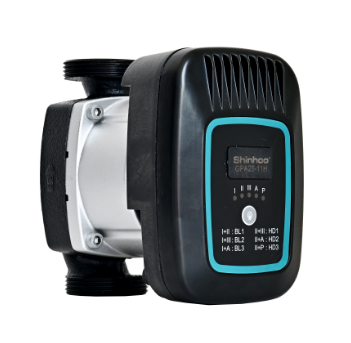
Heating systems are a crucial part of home comfort, but inefficient pumps can lead to higher energy bills, uneven heating, and unnecessary wear and tear. That’s where the Shinhoo GPA Series gas boiler pump comes in—engineered to maximize efficiency, enhance performance, and reduce costs.

Let’s explore how this advanced pump optimizes your heating system while saving energy and money.


1. Smart Adaptive Control for Optimal Efficiency

The GPA Series features intelligent gear adjustment, allowing the pump to automatically adapt its operation based on real-time heating demands.

  • Max/PWM Modes: Switch between maximum power and PWM (pulse-width modulation) for precise control.

  • Energy Savings: Adjusts speed to match load conditions, eliminating wasteful energy consumption.

  • Seamless Integration: Works with your boiler to maintain consistent performance without manual intervention.

"Why run at full power when you don’t need to? The GPA Series ensures your pump only uses the energy required."


2. Significant Energy & Cost Savings

One of the biggest advantages of the GPA Series is its outstanding energy efficiency:

  • Low Operating Cost: At 1m³/h flow rate, it consumes only 7.38 EUR in electricity over a 4-month heating season.

  • Long-Term Savings: Households can save up to 9.65 EUR per year—imagine the impact if 2 million homes switched to GPA pumps (293.76 million kWh saved annually!).

This makes it a smart investment for both homeowners and HVAC installers looking for eco-friendly, cost-effective solutions.


3. Enhanced Comfort with Real-Time Feedback

Nobody likes cold spots or sudden temperature drops. The GPA Series ensures stable heating and hot water by:

  • Providing real-time data (speed, flow rate, power) to your boiler for precise adjustments.

  • Eliminating temperature fluctuations, keeping your home consistently comfortable.

"A smooth, quiet, and reliable pump means no more surprises—just perfect warmth when you need it."


4. Built to Last: 8 Self-Protection Features

Mechanical failures can be costly. The GPA Series includes advanced protection mechanisms to extend pump life:

✔ Over-voltage & under-voltage protection
✔ Over-current & phase loss detection
✔ Light load & stalled rotor prevention
✔ Over-temperature & overheating safeguards

These features reduce hydraulic shocks, minimize wear, and prevent breakdowns, ensuring longer service life with fewer maintenance issues.


5. Compact Design for Easy Installation & Maintenance

  • Space-saving: Measures just 151mm (H) x 93mm (W), fitting seamlessly into tight spaces.

  • User-friendly: Front-mounted control panel for quick adjustments.

  • Simplified servicing: Easy access for maintenance and repairs.

Whether you're a homeowner or an HVAC professional, the GPA Series is designed for hassle-free installation and operation.


6. Eco-Friendly Heating for a Sustainable Future

By reducing energy waste, the GPA Series helps:
✅ Lower carbon footprint
✅ Decrease household electricity consumption
✅ Support global energy-saving initiatives


With millions of potential installations, the environmental impact is substantial—293.76 million kWh saved per year if adopted widely.


Upgrade to Shinhoo GPA Series for Smarter Heating


The GPA Series gas boiler pump isn’t just another component—it’s a high-efficiency, long-lasting solution that cuts costs, improves comfort, and protects the planet.

How To Assemble Mega S Circulation Pump

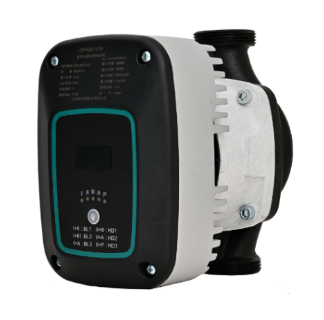
Water circulation systems demand reliability, energy efficiency, and intelligent protection—and Shinhoo Mega S Circulation Pump delivers on all fronts. Whether for industrial, commercial, or high-performance residential applications, this pump is engineered for durability, precision control, and hassle-free operation.  

 Why Choose  Shinhoo Mega S Pump?  

✅ Built for Safety & Longevity  

✔ A3 Level Explosion-Proof – Safe for hazardous environments  

✔ 10-Year Design Life – Robust construction for extended service  

✔ H-Class Motor Insulation – Withstands extreme temperatures  

✔ High-Performance Bearing Coating – Reduces wear and tear  


✅ Energy Efficiency & Quiet Operation  

✔ High Efficiency & Energy Saving – Optimized for reduced power consumption  

✔ Low Noise (≤45dB) – Smooth operation without disruptive sound  


✅ Smart Control & Versatility  

✔ 10-Stage Temperature Control – Adjustable thermal management  

✔ 4 Internal Modes + 3 External Control Options – Supports Auto, Constant Speed, Proportional Flow, Constant Pressure, and Temperature Control  

✔ 0-10V, Modbus, 4-20mA, and Temp Control Interfaces – Seamless integration with automation systems  


✅ 8 Self-Protection Functions for Maximum Reliability  

The pump automatically detects and responds to:  

- Overvoltage / Undervoltage  

- Overcurrent / Phase Loss  

- Light Load / Locked Rotor  

- Overtemperature / Overheat  

LED indicators provide real-time fault alerts, ensuring quick troubleshooting. 

Key Installation Guidelines  

- Mount horizontally only (±5° tolerance) – *Never install vertically!*  

- Rotate the terminal box 90° if needed for wiring convenience  

- Use included gaskets & O-rings for leak-free sealing  

- Tighten screws diagonally to prevent uneven pressure on flanges  

Critical Pre-Startup Checks  

1. Always ground the pump for electrical safety.  

2. Connect an external power switch for easy control.  

3. Open valves and purge air from pipes before first use.  

4. Avoid overtightening screws to prevent flange damage.  

Control Modes & Gear Adjustment  

- Button 1 – Switches between Auto, Constant Speed, Proportional, Constant Pressure, and Temp Control modes.  

- Button 2 – Adjusts gear settings (default: Gear 3).  

  - In Temperature Control Mode, press to cycle through Gears 4-10.  

Fault Indications (LED Flashing Patterns)  

| Flashes | Protection Mode | Action Required |  

| 1 Flash | Overvoltage | Restart after voltage stabilizes |  

| 2 Flashes | Undervoltage | Restart after voltage recovers |  

| 3 Flashes | Overcurrent | Auto-restart after 8s (5 attempts) |  

| 4 Flashes | Phase Loss | Check wiring, then restart |  

| 5 Flashes | Locked Rotor | Auto-restart after 8s (5 attempts) |  

| 6 Flashes | Light Load | Verify load compatibility |  

| 7 Flashes | Overtemperature | Cool down before restarting |  

Shinhoo Mega S Circulation Pump combines industrial-grade durability, smart automation, and energy-saving efficiency in one compact unit. With multiple control modes, self-diagnostic alerts, and easy installation, it’s the ideal choice for:  

- HVAC systems  

- Industrial cooling circuits  

- Water supply & pressure maintenance  

- Temperature-regulated applications  

 Upgrade to the Mega S Pump today and experience unmatched reliability!  


Instant Hot Water at Your Fingertips Meet Shinhoo SPA15-12E Instant Hot Water Pump

Tired of waiting for hot water every time you turn on the faucet? Say hello to Shinhoo SPA15-12E Instant Hot Water Pump, the ultimate solution for instant hot water and a more comfortable, efficient lifestyle.

Hot Water Instantly

With Shinhoo SPA15-12E, the moment you turn on the faucet, hot water flows instantly. No more waiting for the water to heat up, whether it’s for your morning shower, washing dishes, or any other daily task. This circulation pump ensures that hot water is always ready when you need it, delivering unparalleled convenience and comfort.

Intelligent Constant Temperature

Say goodbye to fluctuating water temperatures! Shinhoo SPA15-12E features intelligent constant temperature control, ensuring that the water stays at your desired temperature throughout use. Whether it’s a relaxing bath or a quick hand wash, you’ll enjoy a consistent and comfortable experience every time.

Energy-Saving and Efficient

Designed with energy efficiency in mind, Shinhoo SPA15-12E minimizes energy waste while delivering top-notch performance. Its advanced technology ensures that you get hot water quickly without excessive energy consumption, making it an eco-friendly and cost-effective choice for your home or business.

Comfort Without Waiting

Why wait for hot water when you can have it instantly? Shinhoo SPA15-12E transforms your daily routine by eliminating the frustrating delays of traditional water heating systems. Enjoy the luxury of instant hot water and make every moment at home more comfortable and convenient.

Perfect for Any Setting

Whether it’s for residential use or commercial applications, Shinhoo SPA15-12E is designed to meet your needs. Its compact design, reliable performance, and user-friendly features make it the ideal choice for anyone looking to upgrade their hot water system.

Upgrade Your Lifestyle Shinhoo SPA15-12E

Shinhoo SPA15-12E Instant Hot Water Pump is more than just a device—it’s a lifestyle upgrade. With instant hot water, intelligent temperature control, and energy-saving efficiency, it brings comfort and convenience to every corner of your life.

Don’t wait any longer for hot water. Choose Shinhoo SPA15-12E and experience the future of instant, comfortable, and efficient living today!